Bin Blender / IBC Blender
Closed-container tumble mixing for pharmaceutical, food, and chemical powder processing -- minimal cross-contamination, maximum flexibility.
What Is a Bin Blender?
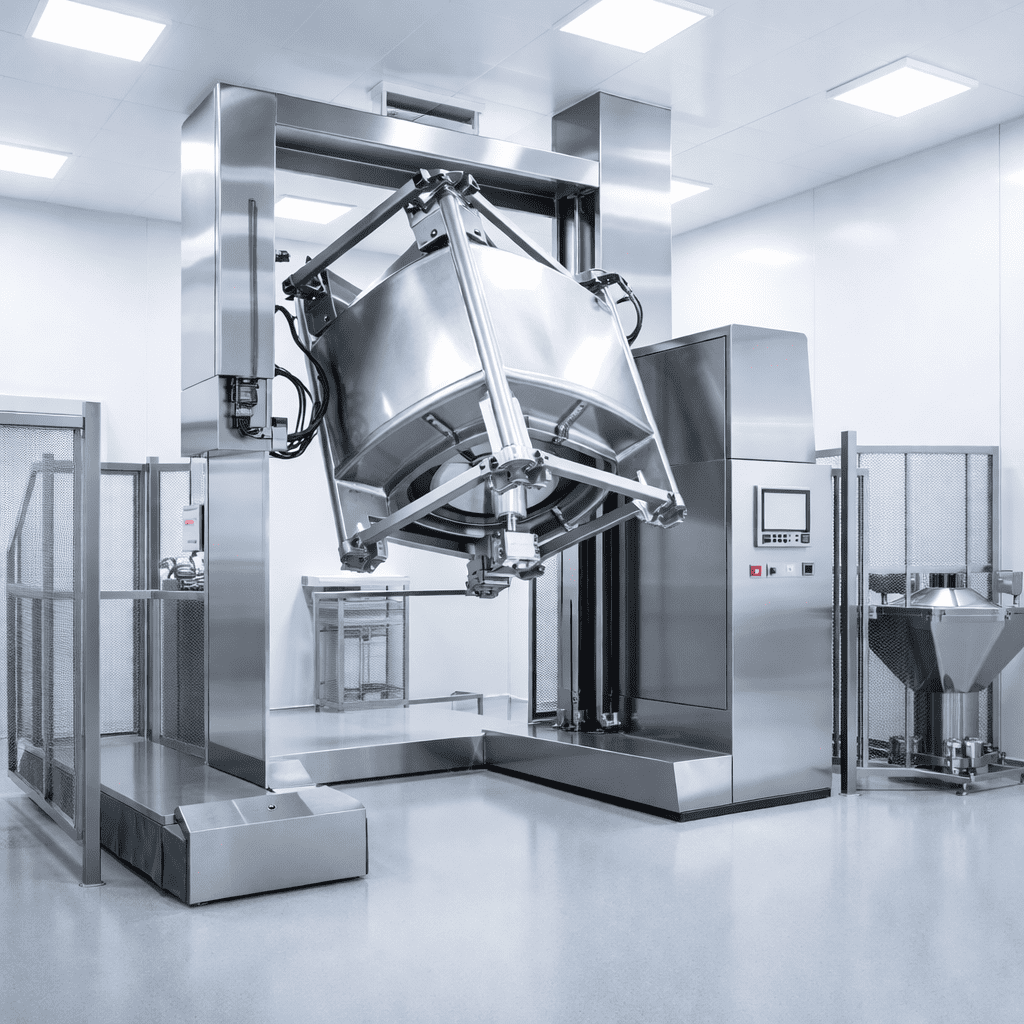
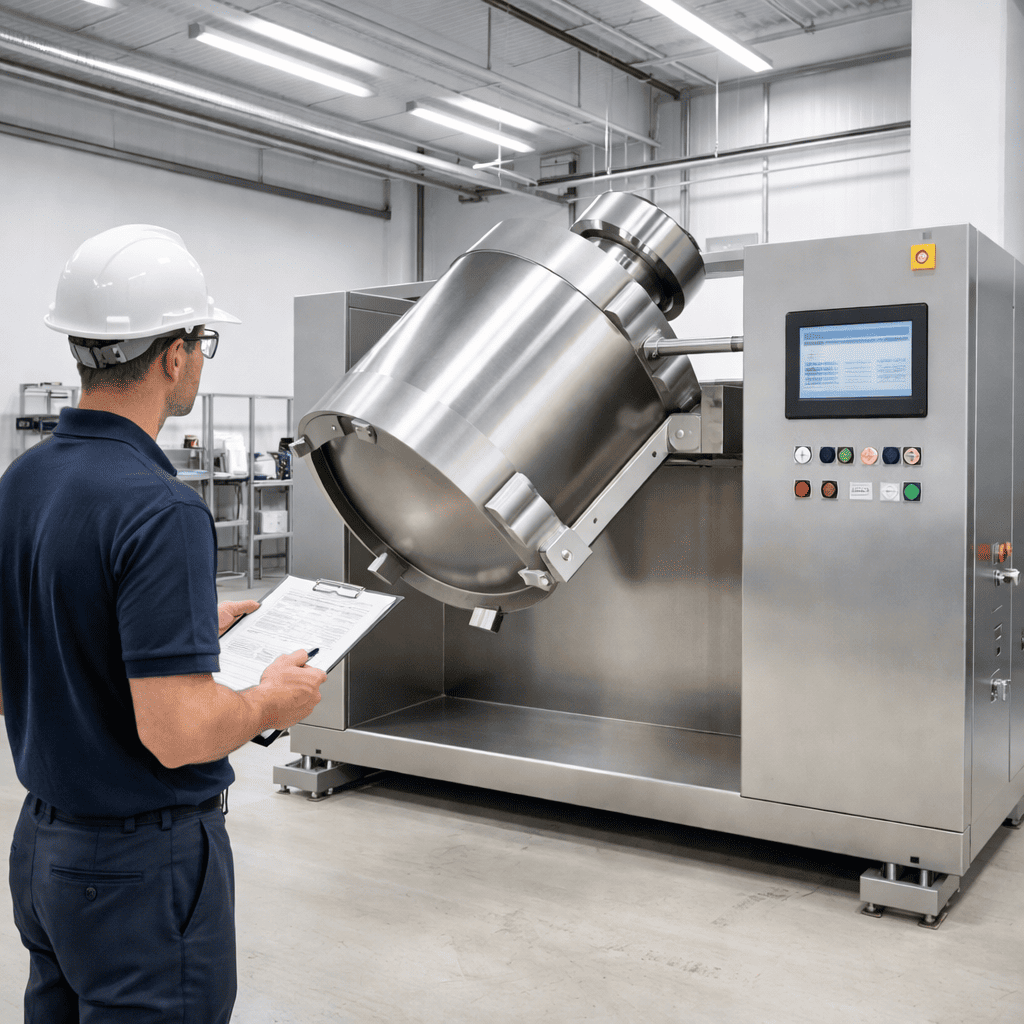
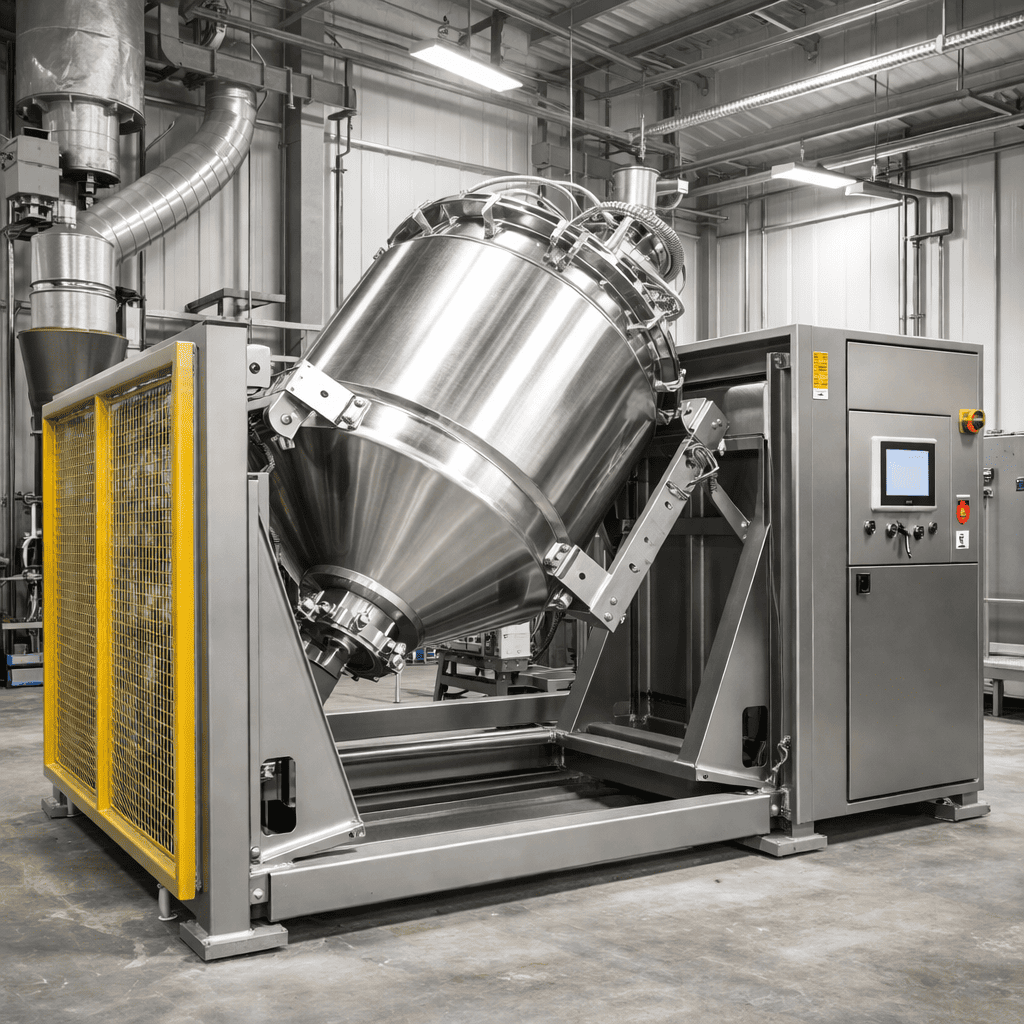
A Bin Blender -- also known as a Tumble Blender or IBC Blender -- is a dry powder mixing machine designed for uniform, closed-container blending. The bin (container) itself rotates on a drive frame, tumbling the powder contents without any internal agitator.
Its defining features include a symmetrical or asymmetrical bin shape, semi-automatic or fully automatic operation, and an inherently closed process that dramatically reduces cross-contamination risk compared to open mixers.
Widely adopted in pharmaceutical, food processing, and chemical industries, Bin Blenders are the preferred choice wherever containment, batch traceability, and hygienic changeover are critical requirements.
How Does a Bin Blender Work?
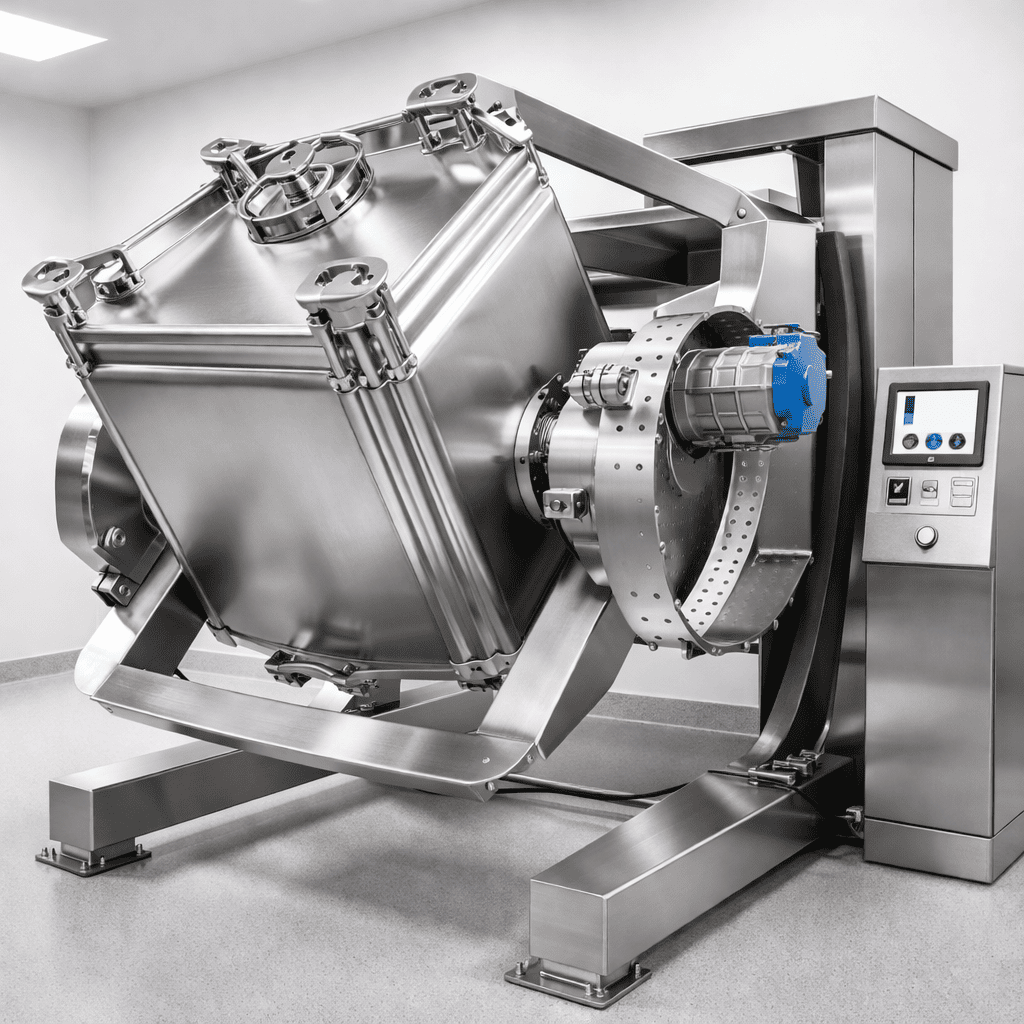
The Bin Blender uses a dual-action mixing mechanism to achieve thorough, gentle homogenization of dry powders and granules.
Tumbling Mixing Action
Powder materials tumble inside the rotating bin, creating a wave-like motion that continuously folds and redistributes the powder mass. This gentle action ensures thorough mixing without generating excessive heat or mechanical stress on the particles.
Bin Directional Action
The main container periodically reverses direction, moves, and tumbles. This multi-directional orientation eliminates dead zones and ensures that all material -- including components near the bin walls -- is fully incorporated into the mixing cycle.
Operating Sequence
Load & Lock
Dock the filled IBC bin onto the drive frame. Tighten the swing arm and locking nut to secure the container.
Set Parameters
Use the central microprocessor control unit to configure rotation speed (5-15 RPM) and mixing time for the specific batch.
Mix Cycle
The bin rotates and reverses direction. The tumbling and wave motion blends all powder components uniformly throughout the batch.
Discharge & Transfer
After mixing, the processed bin automatically slides down the column. Unlock and transfer directly to downstream filling or compression.
YDSH Series -- Model Range
Six standard models covering 400 L to 3000 L total capacity. Custom configurations available on request.
| Model | Total Volume (L) | Max Working Vol. (L) | Speed (RPM) | Motor Power (kW) | Dimensions L×W×H (m) | Weight (kg) |
|---|---|---|---|---|---|---|
| YDSH-400 | 400 | 320 | 5-15 | 4.75 | 2.63 × 2.22 × 2.55 | 1,800 |
| YDSH-800 | 800 | 640 | 5-15 | 7.0 | 2.96 × 2.55 × 3.10 | 2,600 |
| YDSH-1000 | 1,000 | 800 | 5-15 | 8.5 | 3.15 × 3.10 × 3.40 | 3,020 |
| YDSH-1500 | 1,500 | 1,200 | 5-15 | 10.5 | 3.26 × 3.20 × 3.65 | 3,750 |
| YDSH-2000 | 2,000 | 1,600 | 5-15 | 11.5 | 3.50 × 3.55 × 3.95 | 4,250 |
| YDSH-3000 | 3,000 | 2,400 | 5-15 | 15.0 | 3.80 × 3.70 × 4.20 | 5,700 |
* Working volume is 80% of total volume. Specifications subject to change without notice. Contact Yinda for project-specific configurations.
Industries & Use Cases
The Bin Blender's closed-container design and gentle tumbling action make it suitable across a wide range of regulated and industrial sectors.
Pharmaceutical & Drug
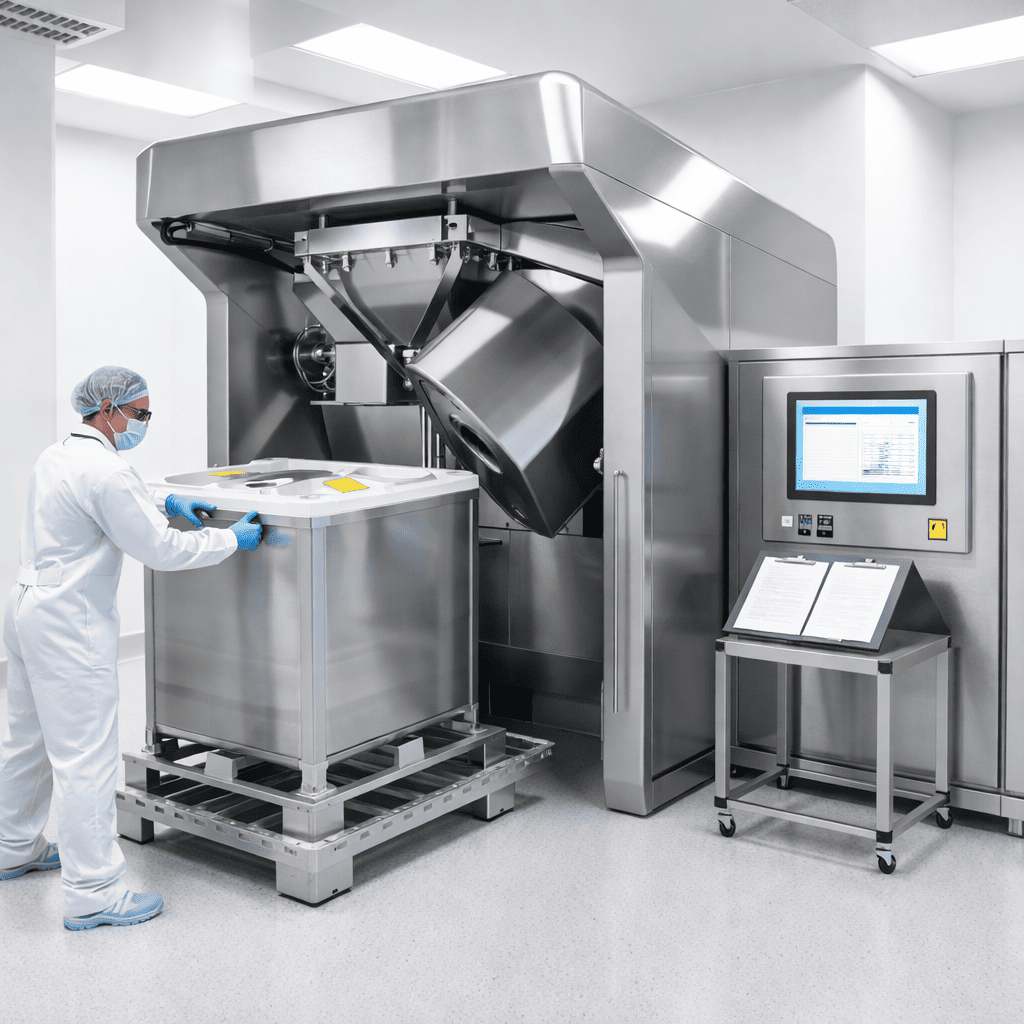
Blending active pharmaceutical ingredients (APIs) with excipients. Ideal for pre-compression blending, capsule filling, and dry granulation preparation.
- API + excipient blending
- Pre-compression powder mixing
- Capsule fill material preparation
Chemical & Laboratory
Mixing specialty chemicals, pigments, and fine chemical powders where contamination control and precise batch composition are essential.
- Specialty chemical blending
- Pigment & colorant mixing
- R&D and lab-scale batches

Food Processing & Packaging
Blending food ingredients, spice mixes, nutritional powders, and food additives with full containment to prevent flavor cross-contamination.
- Nutritional powder blending
- Spice & seasoning mixing
- Food additive blending
Animal Feed Industry
Uniform blending of feed additives, vitamins, minerals, and premix powders for consistent nutritional content in every batch.
- Vitamin & mineral premix
- Feed additive blending
- Aquaculture feed preparation
Building & Construction
Dry mortar blending, ceramic powder mixing, and construction chemical powder homogenization for consistent product quality.
- Dry mortar blending
- Ceramic powder mixing
- Construction chemical powders
Nutraceuticals & Health
Gentle blending of health supplement powders, herbal extracts, and functional ingredients where product integrity and batch traceability are paramount.
- Health supplement powders
- Herbal extract blending
- Functional ingredient mixing
Bin Blender vs. V-Blender
Understanding the differences helps you select the right equipment for your specific production requirements.
| Comparison Factor | Bin Blender (IBC) | V-Blender |
|---|---|---|
| Container Shape | Bin-shaped; symmetric or asymmetric (IBC) | "V"-shaped container |
| Operation Mode | Semi-automatic or fully automatic (bin weight requires drive frame) | Can be manually rotated depending on model size |
| Suitable Materials | Dry powders; also handles lubricants converted to powder form | Best for dry powder ingredients; widely used in pharma |
| Cross-Contamination | Very low -- fully closed system | Low -- but requires thorough cleaning between batches |
| Cleaning Ease | More challenging when handling different product types; bin can be dedicated per product | Wide opening for easy cleaning, loading, unloading |
| Batch Transfer | Direct IBC transfer to downstream -- minimal handling | Requires transfer step after mixing |
| Automation Level | Easily automated -- PLC/HMI integration | Automatable but typically simpler control |
| Best Suited For | Multi-product pharma, large-batch regulated production, IBC-based workflows | Single-product or limited-SKU pharma, lab-scale, smaller batches |
Not sure which is right for your process?
The best choice depends on your material properties, batch size, number of SKUs, cleaning requirements, and downstream workflow. Contact Yinda's engineering team for a process-based recommendation tailored to your specific application.
Pros & Cons of Bin Blenders
A transparent assessment to help you make an informed purchasing decision.
Advantages
- Reduced Segregation Risk
Multi-directional tumbling action minimizes particle segregation by size or density, ensuring homogeneous distribution throughout the batch.
- Zero Downtime for Cleaning
The drive frame stays in place while the IBC bin is removed for cleaning. The next batch can begin immediately with a clean, dedicated bin.
- Fully Enclosed Product
Closed-system design prevents dust exposure, contamination, and moisture ingress throughout the entire mixing cycle.
- High Processing Flexibility
Adjustable speed and time parameters accommodate a wide range of powder types, particle sizes, and batch compositions without hardware changes.
- Shorter Mixing Time
Efficient tumbling action achieves target blend uniformity faster than many conventional mixer types, improving overall throughput.
- Easy Automation Integration
PLC-controlled operation with programmable recipes simplifies automation, batch recording, and integration into GMP production workflows.
Limitations to Consider
- Cleaning Can Be Complex
When a single bin is used for multiple product types, thorough cleaning and validation is required. The solution is to dedicate separate bins per product -- adding to bin inventory cost.
- All Components Subject to Wear
Drive frame bearings, coupling mechanisms, and bin seals require periodic inspection and replacement. A proper preventive maintenance schedule is essential for reliable operation.
- Asymmetric Structure Learning Curve
The irregular or asymmetric IBC bin shape can be initially confusing for operators unfamiliar with this equipment type. Proper training is important for correct docking, locking, and discharge procedures.
- Higher Initial Investment
The drive frame plus multiple IBC bins represents a higher upfront cost compared to a single V-Blender unit, though the operational efficiency and containment benefits typically justify the investment in regulated environments.
Yinda's recommendation: For multi-product pharmaceutical or food facilities, the IBC bin system's operational advantages -- particularly zero changeover downtime and full containment -- generally outweigh the higher initial cost over the equipment lifecycle.
Materials & Equipment Types
Understanding the construction materials and IBC bin configurations available for your application.
Construction Materials
All product-contact surfaces of Yinda Bin Blenders are manufactured from stainless steel to prevent corrosion, abrasion, and chemical reactions from liquids and powders during processing.
Higher molybdenum content provides superior corrosion resistance. Required for pharmaceutical, nutraceutical, and food-grade applications. All product-contact surfaces polished to Ra ≤ 0.4 μm.
Standard austenitic stainless steel suitable for food processing, chemical, and general industrial applications. Cost-effective and widely accepted for non-pharmaceutical use.
Drive frame, support column, and non-contact structural components use carbon steel with protective coating or stainless steel depending on project requirements and environment.
IBC Bin Types & Configurations
IBC stands for Intermediate Bulk Container -- the detachable bin that serves as both the mixing vessel and the material transport container. This is the standard configuration for the YDSH series.
Asymmetric IBC Bin
The most common IBC configuration. The irregular, non-symmetric shape creates turbulent powder flow patterns during rotation, resulting in superior mixing uniformity compared to symmetric containers. Particularly effective for powders with different bulk densities.
Symmetric Bin Configuration
Symmetric bin shapes are available for applications where a more predictable, uniform flow pattern is required. Easier to validate for certain pharmaceutical processes.
Dedicated vs. Shared Bins
For multi-product facilities, Yinda recommends maintaining dedicated bins per product to eliminate cleaning validation burden and cross-contamination risk. A single drive frame can serve multiple dedicated bins.
Available Configuration Options
The Yinda Machinery Difference
More than a machine supplier -- a process engineering partner committed to your production success.
Certified Quality
SGS, CE, and ISO certifications back every machine we produce. Our quality management system covers incoming materials, in-process inspection, and final factory acceptance testing.
Global Export Experience
With 12+ years of overseas business and participation in 40+ international trade shows, Yinda understands the documentation, packaging, and compliance requirements for global equipment delivery.
Dedicated Engineering Team
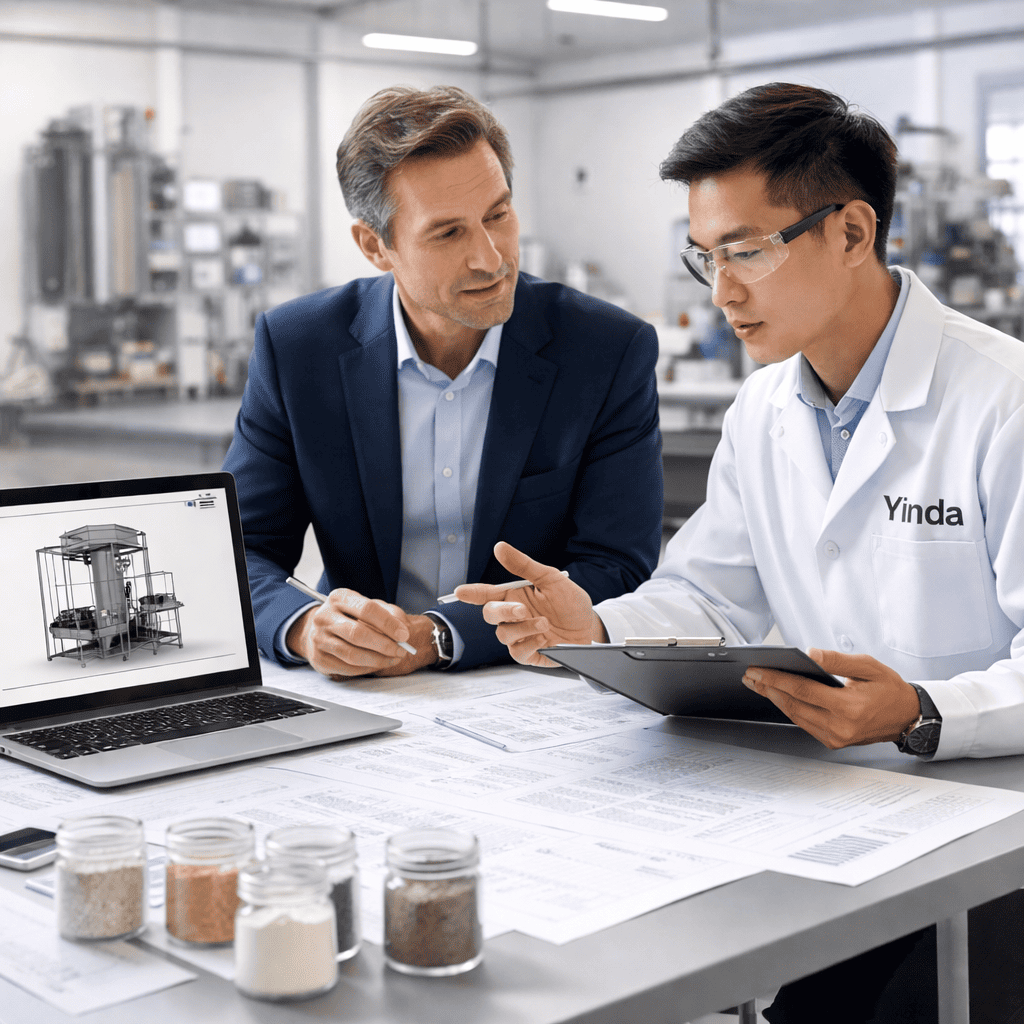
Our process engineers provide 7×24 free consultation and emergency assistance. We don't just recommend a model -- we evaluate your material, process goals, and production requirements before any recommendation.
Premium Global Components
Spare parts and key components are sourced from globally recognized industry brands. This ensures long-term parts availability, consistent performance, and simplified local maintenance.
Full-Lifecycle Service
From on-site installation and commissioning to operator training, spare parts supply, preventive maintenance programs, and equipment refurbishment -- Yinda supports your equipment throughout its entire operational life.
Material Testing Before Purchase
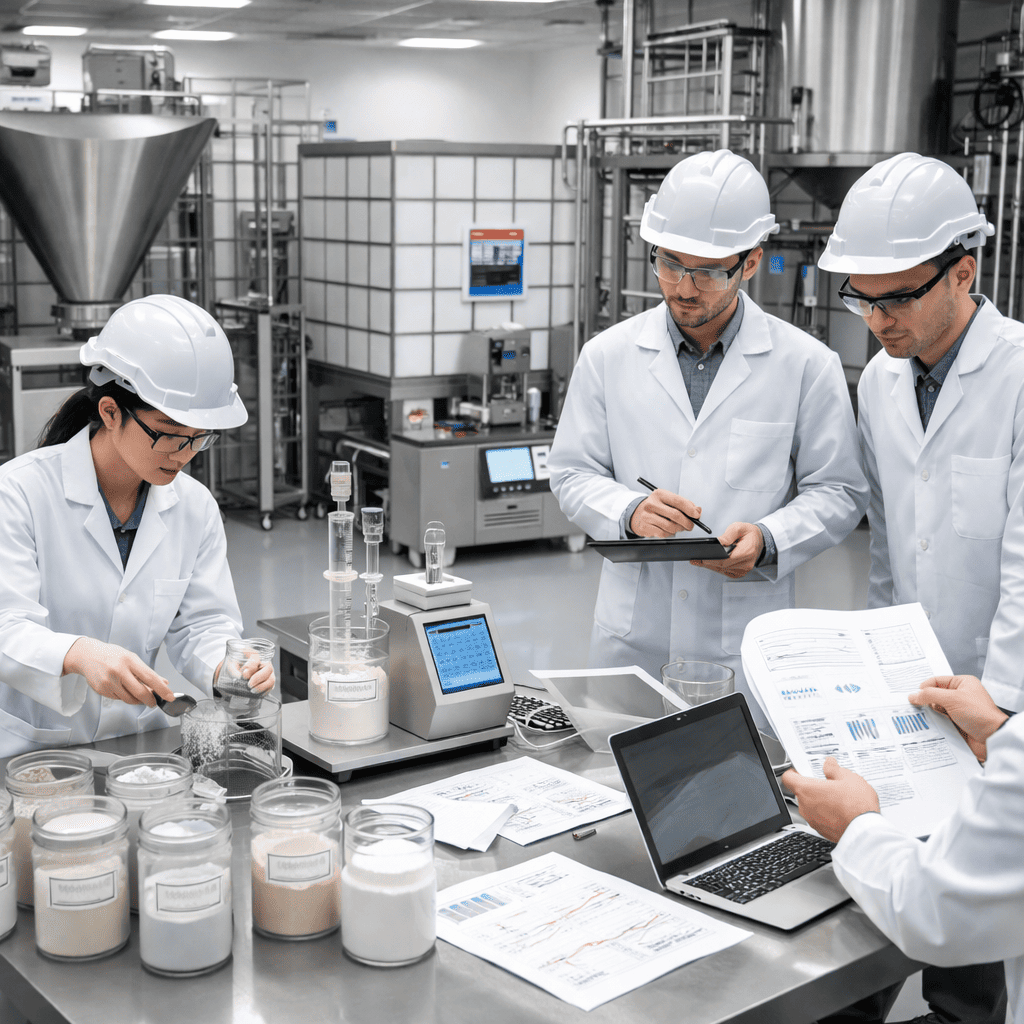
Send us your actual powder or granule sample. Our test center will run trials on the Bin Blender, document mixing uniformity, cycle time, and any processing observations -- reducing your selection risk before commitment.
Certifications & Quality Standards
Common Questions About Bin Blenders
Answers to the questions we hear most often from buyers and engineers evaluating IBC Blenders.
What is the difference between a Bin Blender and an IBC Blender?
They refer to the same type of equipment. "Bin Blender" describes the general operating principle -- a bin (container) that rotates to mix its contents. "IBC Blender" specifically refers to the use of an Intermediate Bulk Container (IBC) as the mixing vessel. The IBC bin can be detached from the drive frame, making it both the mixing vessel and the material transport container. This is the standard design for the Yinda YDSH series.
What fill level is recommended for best mixing results?
The optimal working volume for a Bin Blender is approximately 60-80% of total bin capacity. All YDSH series models are specified with a maximum working volume of 80% of total volume (e.g., YDSH-1000 has 1,000 L total capacity with 800 L maximum working volume). Overfilling reduces the free space needed for effective tumbling, while underfilling may reduce mixing uniformity. For critical applications, mixing validation at your target fill level is recommended.
How long does a typical mixing cycle take?
Mixing cycle time depends on the powder characteristics, fill level, rotation speed, and the required blend uniformity. Typical cycles range from 10 to 30 minutes for most dry powder applications. The YDSH series operates at 5-15 RPM, and the PLC allows you to program and save specific time and speed parameters for each product. For pharmaceutical applications, the mixing time is typically determined through blend uniformity studies during process validation.
Is the Bin Blender suitable for pharmaceutical GMP production?
Yes. The Yinda YDSH series is designed with GMP-compatible features: SS316L product-contact surfaces, polished interiors (Ra ≤ 0.4 μm), no dead zones, fully enclosed processing, and PLC control with batch recording. Yinda can provide FAT documentation, dimensional drawings, material certificates, and support for IQ/OQ/PQ validation activities. The specific scope of validation support should be agreed upon in the purchase contract. Please confirm exact validation requirements with your quality team before ordering.
Can one drive frame work with multiple IBC bins?
Yes -- this is one of the key operational advantages of the IBC Blender system. A single drive frame can be used with multiple IBC bins of the same size. In multi-product facilities, this allows you to maintain dedicated bins per product (eliminating cleaning validation between different products) while the drive frame remains in production. When one batch is mixing, the next bin can be loaded and ready. This significantly improves throughput compared to fixed-vessel mixers.
What powders are NOT suitable for a Bin Blender?
Bin Blenders are generally not recommended for: highly cohesive or sticky powders that clump during tumbling; wet or paste-like materials (a Trough Mixer or Sigma Mixer would be more appropriate); powders requiring high-shear dispersion of agglomerates; or applications requiring liquid addition during mixing without additional spray nozzle systems. For high-oil, high-sugar, or highly hygroscopic materials, a material test is strongly recommended before final equipment selection. Contact Yinda's engineering team to discuss your specific material challenges.
What documentation does Yinda provide with the equipment?
Standard documentation includes: equipment operation manual, maintenance manual, electrical schematic drawings, spare parts list, packing list, commercial invoice, and CE/ISO certificates. For pharmaceutical or regulated projects, additional documentation such as material certificates (SS316L mill certificates), FAT records, dimensional inspection reports, test videos, and IQ/OQ/PQ support documents can be provided -- the scope must be agreed upon before the order is placed. All technical documents are provided in English as standard; other languages available on request.
Can I test my material before purchasing?
Yes. Yinda strongly encourages material testing before equipment commitment. You can send a sample of your actual powder to Yinda's test center. Our engineers will run a mixing trial, document the mixing uniformity, cycle parameters, and any observations, and provide you with photos, video, and a written test report. Testing options include: recorded test video, live video testing session, sample return, or in-person witness testing at our factory. Material testing significantly reduces selection risk and ensures the equipment will meet your production requirements.
Ready to Discuss Your Mixing Requirements?
Tell us about your powder, batch size, and production goals. Yinda's engineering team will evaluate your requirements and recommend the right YDSH model and configuration -- or suggest an alternative if a different mixer type is more suitable.