
Yinda Machinery Powder Processing Equipment
Hammer Mill Grinder for Reliable Powder Size Reduction
A classic and widely used grinding machine for dry powders, granules, spices, grains, herbs, chemicals, and fibrous materials. Control final fineness by changing screens and configure the system for dust collection, GMP hygiene, and industrial production.
- Typical Fineness
- 80-400
- mesh range
- Capacity Range
- kg-tons
- per hour
- Material Contact
- 304/316L
- stainless steel
- Dust Options
- 3
- configurations
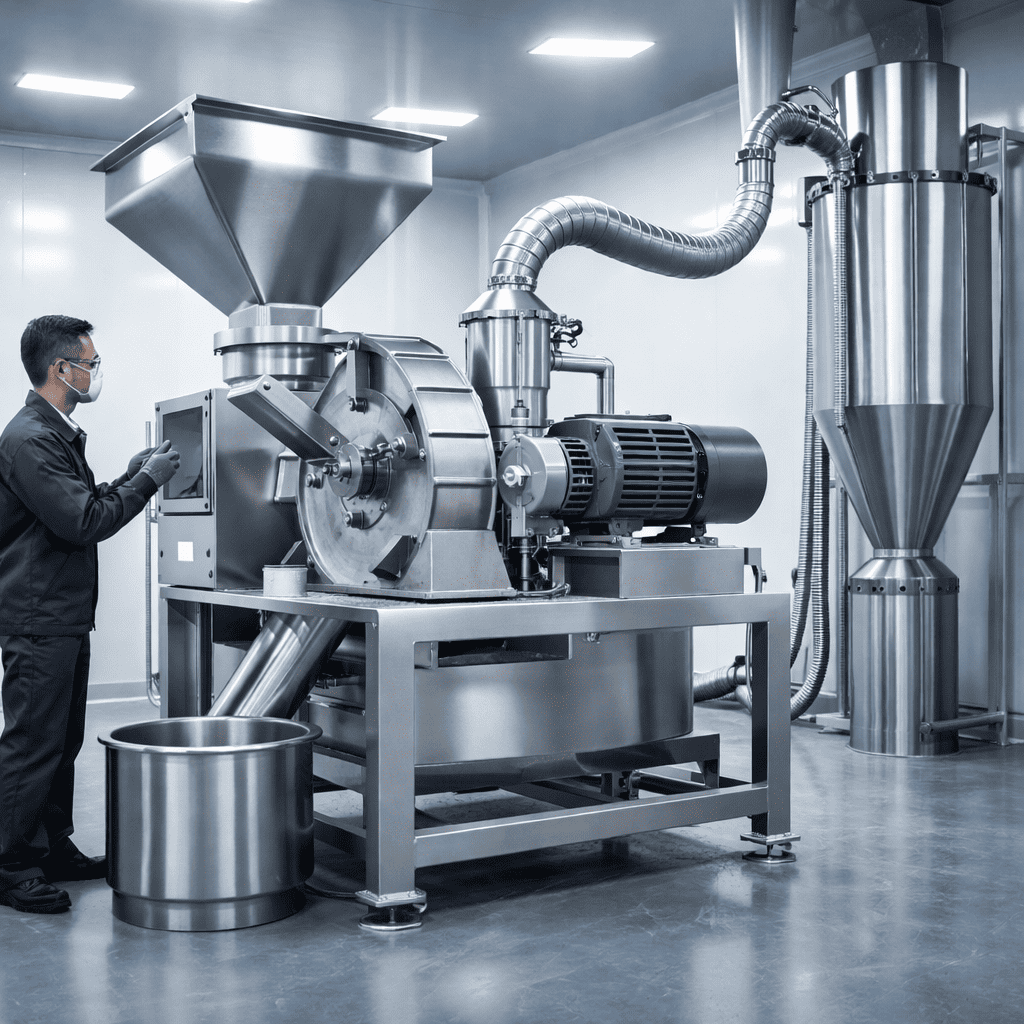
Product Overview
The all-round grinding workhorse for powder processing
The Yinda Hammer Mill Grinder is designed for general-purpose size reduction in food, pharmaceutical, nutraceutical, chemical, agricultural, and industrial powder applications. It uses high-speed rotating hammers to impact, shear, and rub materials until particles become small enough to pass through the selected screen.
Flexible Fineness
Change screen aperture to adjust output size for common powder grinding needs.
Robust Structure
High-strength alloy steel hammers withstand repeated impact under demanding production.
Hygienic Build
SUS304 or SUS316L contact parts with polished surfaces for cleaning and GMP-oriented production.
Working Principle
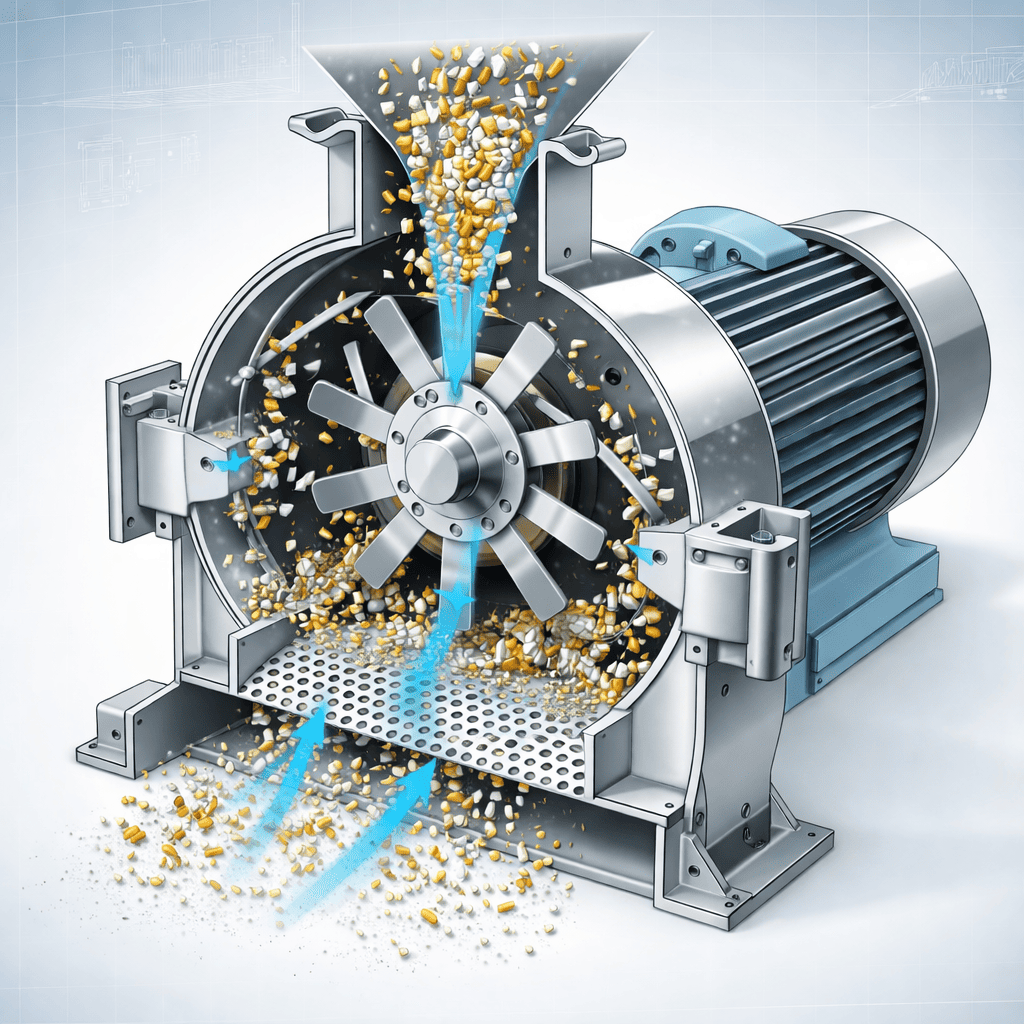
Impact, collision, shearing, and screen-controlled discharge
Material enters the grinding chamber through the feeding inlet. The high-speed rotor drives the hammers to strike the material repeatedly. Particles collide with the chamber wall, hammer edges, and each other until they are reduced to the required size.
The screen installed at the bottom of the chamber controls final particle size. Only particles small enough to pass through the screen holes are discharged, while oversized particles continue grinding inside the chamber.
- 1
Controlled Feeding
Material is introduced into the grinding chamber at a suitable feed rate.
- 2
High-Speed Grinding
Rotating hammers generate impact and shearing forces to reduce particle size.
- 3
Screen Classification
Fine particles pass through the screen; coarse particles remain for further grinding.
Key Advantages
Built for practical production, fast cleaning, and wide material compatibility
Screen-Based Fineness Control
Switch screens to produce different powder sizes without complex adjustment.
Durable Hammer Assembly
High-strength hammers and robust rotor structure handle repeated impact loads.
Simple Operation
Straightforward structure makes operation, screen replacement, inspection, and maintenance easier.
GMP-Oriented Hygiene
Stainless steel contact parts and polished surfaces help reduce residue and cross-contamination risk.
Three Configuration Choices
Select the right dust collection system for your workshop and product standard
From basic grinding to enclosed dust-controlled production, Yinda configures the hammer mill system according to material dustiness, recovery target, hygiene level, and environmental requirements.
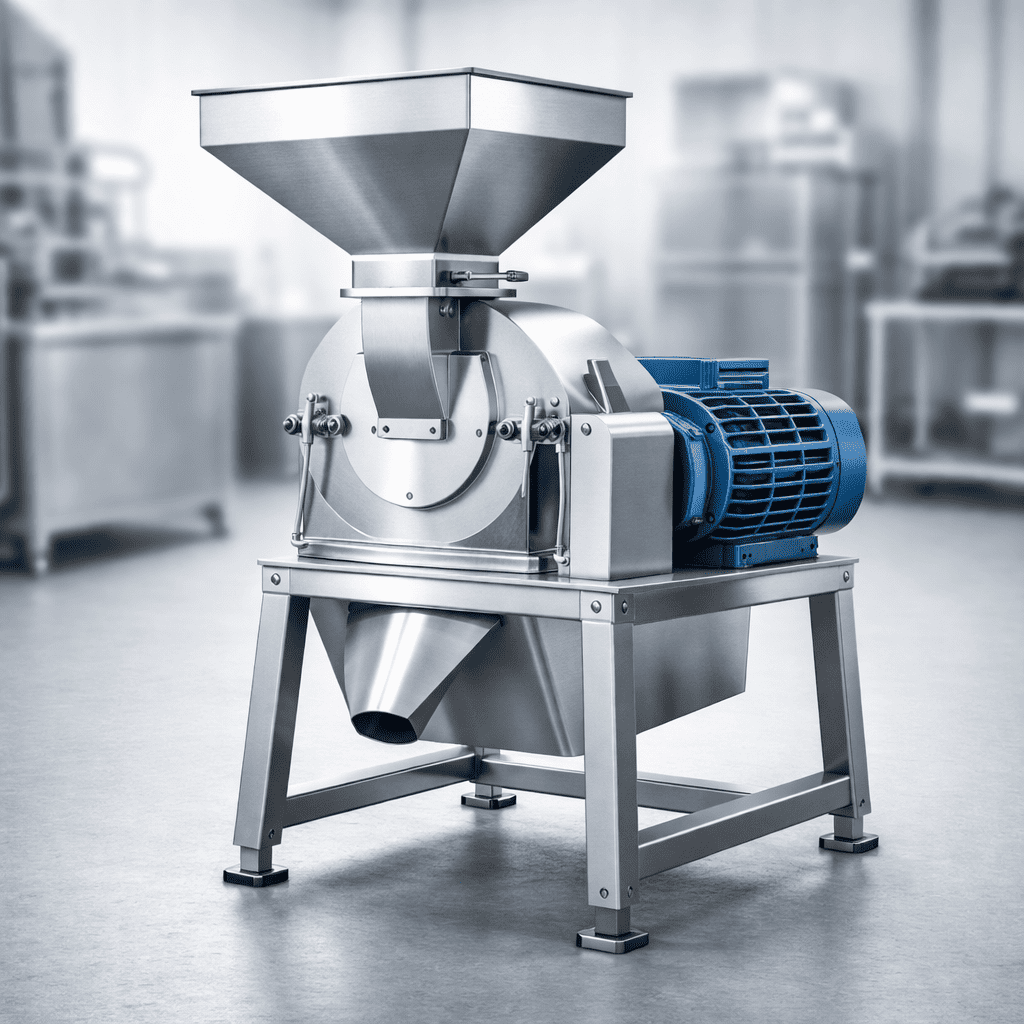
Basic Type
Standard grinder configuration for materials and workshops with lower dust collection requirements.
- Compact footprint
- Suitable for simple grinding tasks
- Lower initial investment
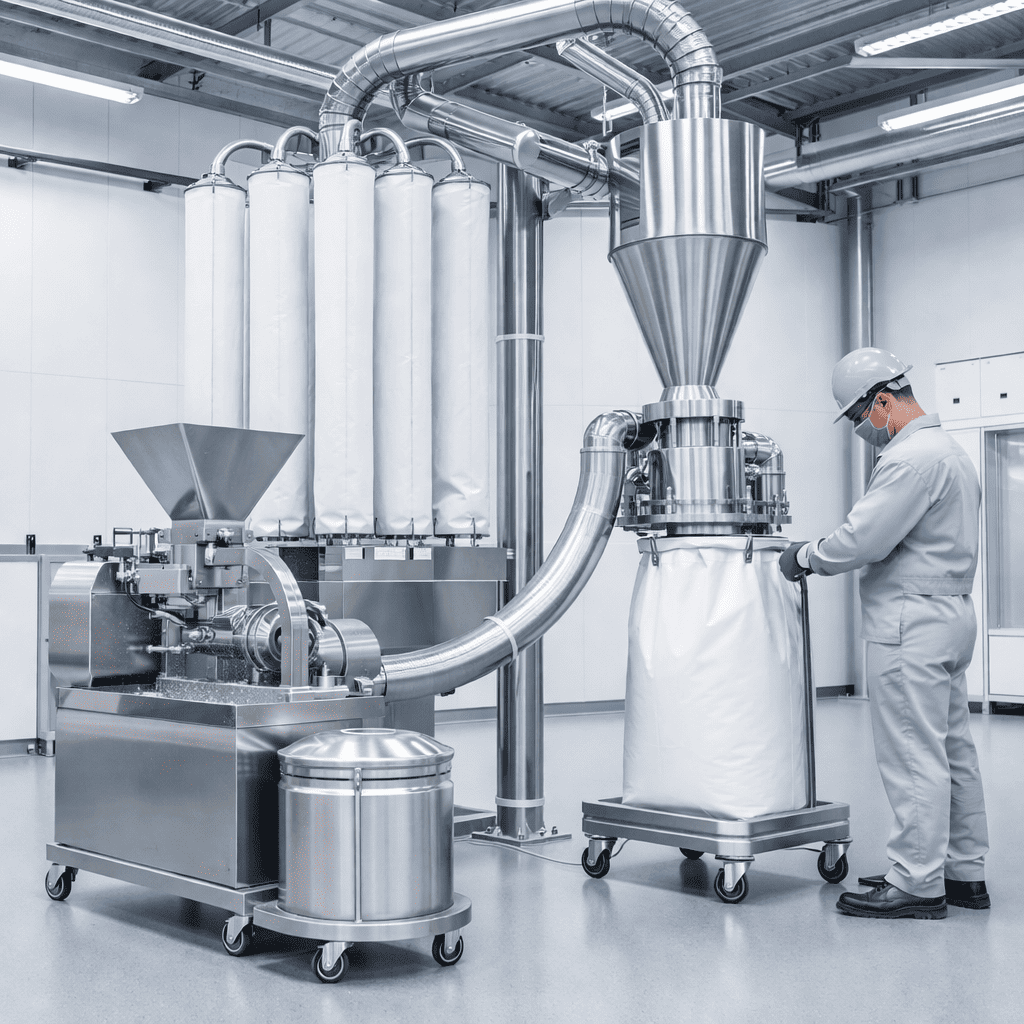
Dust Bag Type
Equipped with a dust collecting bag to capture powder and reduce airborne dust in general processing workshops.
- Improved dust collection
- Better material recovery
- Balanced cost and performance

Cyclone Dust Collection Type
High-efficiency enclosed system with cyclone separator and pulse dust collector for cleaner, GMP-oriented production.
- Closed dust-controlled operation
- Higher powder recovery
- Preferred for stricter hygiene and environmental needs
Models and Capacity
From laboratory trial batches to industrial-scale grinding lines
Yinda provides multiple hammer mill models, such as YD-10 to YD-1000 series, with capacity ranges from tens of kilograms per hour to several tons per hour depending on material properties, screen size, moisture, hardness, feeding method, and system configuration.
| Production Level | Typical Use | Capacity Reference | Recommended Configuration |
|---|---|---|---|
| Lab / R&D | Material trials, formulation development, small batches | Tens of kg/h, material-dependent | Basic or dust bag type |
| Pilot / Small Production | Food powder, spices, herbs, additives, small chemical batches | Medium output range | Dust bag or cyclone type |
| Industrial Production | Continuous grinding, integrated line operation, higher dust control | Up to ton-level output | Cyclone separator with pulse dust collector |
Final capacity must be confirmed by material information or grinding test because oil content, sugar content, fiber, moisture, hardness, and screen aperture strongly affect output.
Applications
Widely used in food, pharmaceutical, chemical, agricultural, and industrial materials

Food and Spices
Sugar, grains, spices, soybean, tea, dehydrated vegetables, herbs, and seasoning powders.

Pharmaceutical and Herbs
Chinese herbs, botanical materials, granules, nutraceutical ingredients, and medicinal powders.

Chemical Industry
Dyes, resins, fertilizers, fillers, additives, and selected dry chemical raw materials.
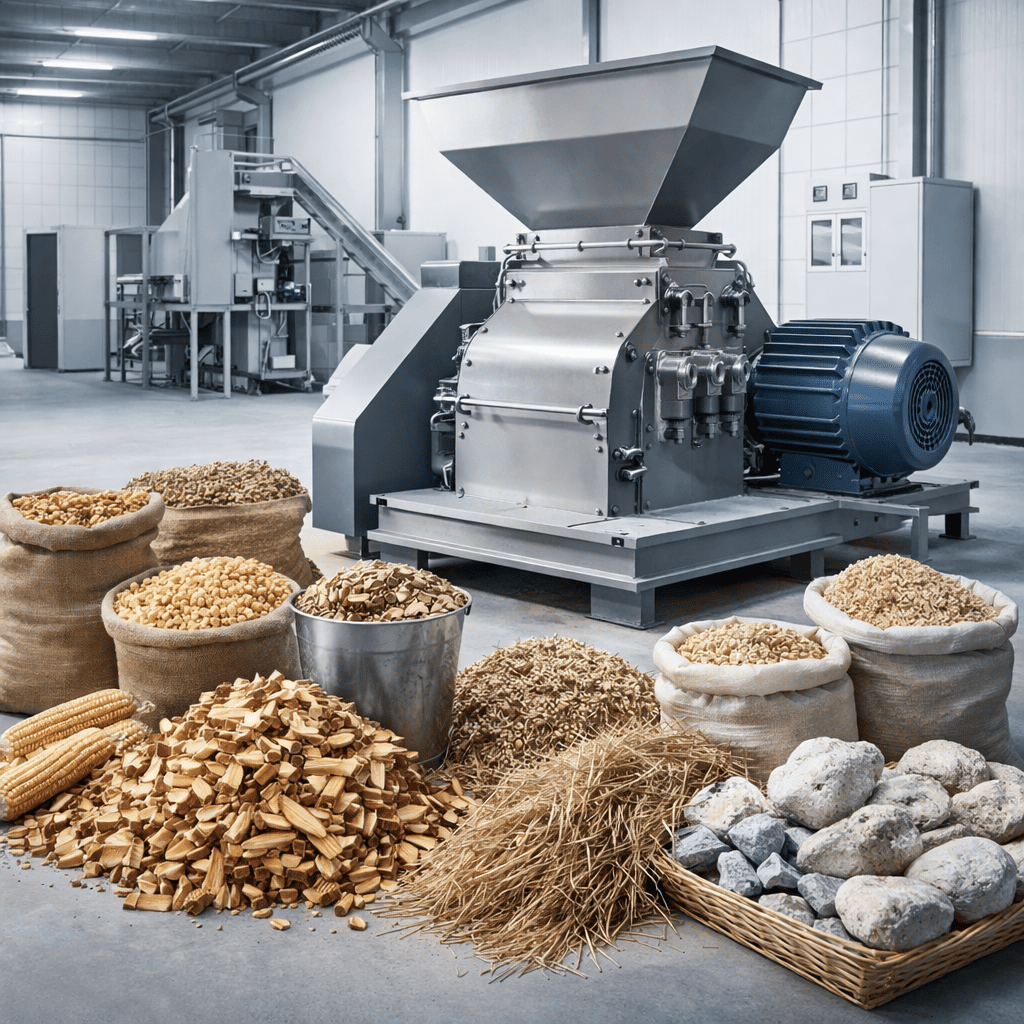
Agriculture and Minerals
Agricultural products, wood chips, feed materials, and selected preliminary mineral crushing tasks.
Customization
Designed from your material, not only from a machine model
Yinda evaluates material properties before recommending a hammer mill configuration. Oil content, sugar content, fiber, hardness, moisture, abrasiveness, heat sensitivity, and dust behavior all influence screen selection, hammer design, rotation speed, feeding method, and dust collection.
Material Contact Parts
SUS304 or SUS316L, polished internal surface, food or pharmaceutical hygiene requirements.
Grinding Components
Hammer shape, hammer material, screen aperture, rotor speed, and wear part options.
System Integration
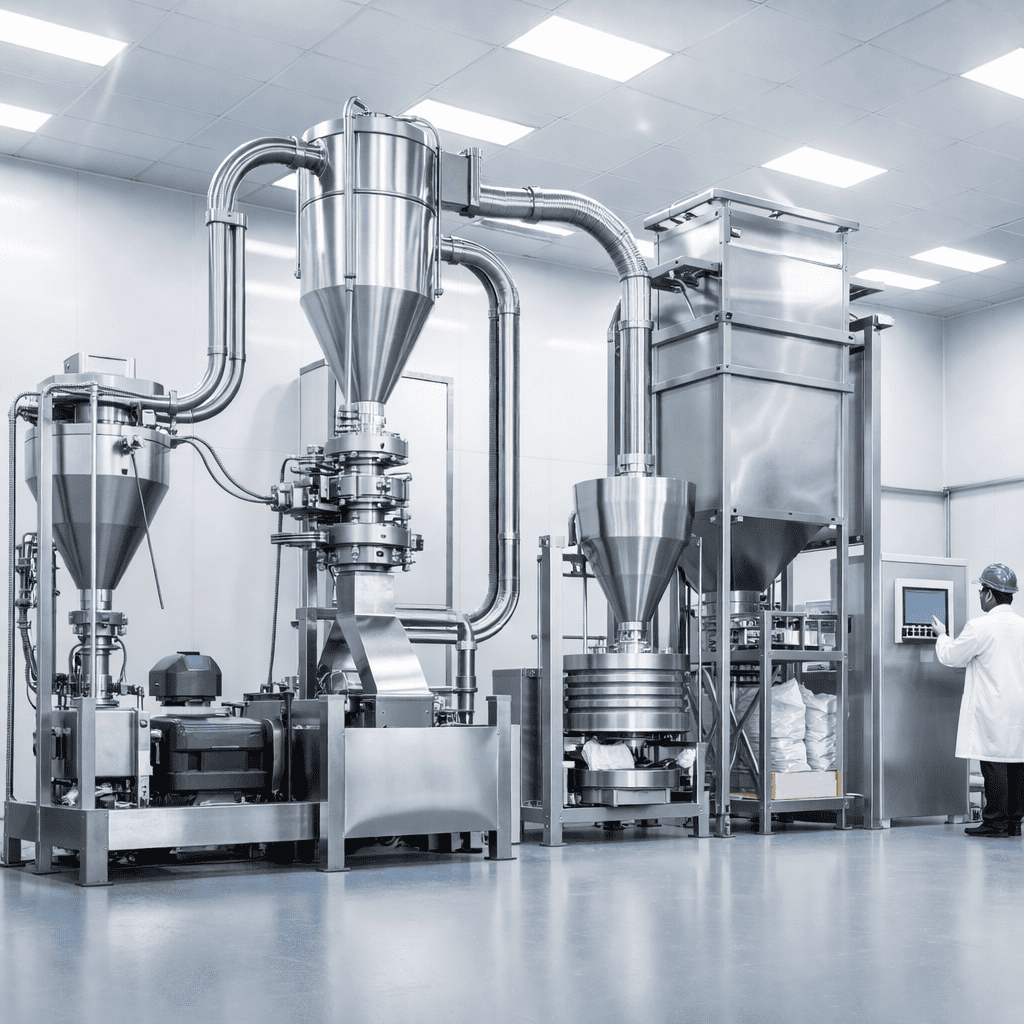
Feeding, cyclone separation, pulse dust collection, rotary valve, sieve, mixer, and packaging interface.
Control and Safety
VFD speed control, interlocks, temperature monitoring, voltage customization, and control panel options.
Material Testing
Verify fineness, output, temperature rise, dust level, and recovery before final selection
For materials with oil, sugar, fiber, heat sensitivity, stickiness, or unknown grinding behavior, Yinda can arrange material testing to reduce selection risk and optimize the equipment configuration.
Typical test records include:
- Material condition
- Screen specification
- Final particle size
- Estimated capacity
- Temperature change
- Dust and recovery rate
- Screen blockage observation
- Cleaning recommendations
Project Process
From material evaluation to long-term production support
Understand
Collect material, target fineness, capacity, moisture, and production requirements.
Test
Arrange grinding tests when material behavior needs verification.
Configure
Confirm model, screen, hammer, material, dust collection, and controls.
Manufacture
Produce, assemble, inspect, and run equipment according to confirmed specifications.
Support
Provide installation guidance, operation training, spare parts, and maintenance support.
Service Support
Documentation, installation guidance, training, and spare parts
Yinda supports hammer mill grinder projects with technical drawings, manuals, packing documents, remote installation guidance, operator training, maintenance advice, and long-term spare parts supply.
Technical Files
Layout drawings, operating manuals, maintenance instructions, spare parts lists, and electrical information.
Factory Testing
Assembly inspection, no-load running, function checks, and optional material testing or FAT.
Training
Start-up checks, feeding method, screen replacement, cleaning, lubrication, and troubleshooting.
Spare Parts
Screens, hammers, blades, bearings, seals, belts, filter bags, valves, and electrical components.
FAQ
Hammer Mill Grinder selection questions
What fineness can the hammer mill grinder achieve?
It is commonly used for approximately 80-400 mesh grinding needs, depending on material properties, screen aperture, rotor speed, and feeding condition.
Is it suitable for oily, sugary, or sticky materials?
Some oily, sugary, sticky, or heat-sensitive materials may cause adhesion, temperature rise, or screen blockage. Yinda recommends material testing before final model selection.
Which dust collection configuration should I choose?
Basic type suits low-dust requirements, dust bag type suits general workshops, and cyclone plus pulse dust collector type is recommended for enclosed, cleaner, higher-recovery, GMP-oriented production.
Can it be connected with a complete powder production line?
Yes. It can be integrated with feeding equipment, coarse crusher, cyclone separator, dust collector, vibrating sieve, mixer, storage hopper, and packaging connection.
Get a Technical Recommendation
Tell us your material and production target. Yinda will help configure the right hammer mill system.
For accurate selection, prepare your material name, feed size, target mesh, capacity, moisture, oil or sugar content, bulk density, cleaning requirement, voltage, and preferred dust collection level.