
Buckwheat Hull Grinding Machine: YDWS Pin Mill for 40-60 Mesh Buckwheat Hull Powder

Buckwheat Hull Powder Processing
Buckwheat Hull Grinding Machine: YDWS Pin Mill for 40鈥?0 Mesh Buckwheat Hull Powder
A practical single-stage grinding solution for clean, dried buckwheat hulls, with interchangeable screens, stainless-steel construction and optional dust collection.
Quick answer: what machine is suitable?
For dried buckwheat hulls, the YDWS Series Pin Mill is a suitable and cost-conscious option for producing medium-fine powder. Because clean, dried hulls are already small, lightweight and brittle, they can usually enter the pin mill directly without a separate coarse-crushing stage.
Dried Buckwheat Hulls 鈫?YDWS Series Pin Mill 鈫?Screen Classification 鈫?Buckwheat Hull Powder (40鈥?0 Mesh)
High-speed rotating pins apply repeated impact and shear, while a precision screen controls discharge size. The source grinding test reports approximately 40鈥?0 mesh for the target application. Actual capacity and final particle-size distribution should be confirmed by testing the customer鈥檚 material.

Material characteristics and grinding challenges
Hollow and fibrous
Buckwheat hulls have a light, springy structure and more than 30% insoluble non-starch polysaccharides according to the source. Repeated pin impact and shear are intended to break this structure more uniformly than simple compression.
Low moisture, high cellulose
Dry hulls become brittle and easier to reduce, but may generate airborne fines. A dust collection system can help maintain workshop cleanliness and recover fine powder.
Heat-sensitive components
Natural melanin, flavonoids and antioxidant compounds may be affected by excessive heat. Short residence time, optimized rotor speed and optional cooling can be considered when temperature control is important.
Low fat and non-sticky
The source reports approximately 0.13% fat and 4% protein. This generally supports free-flowing, screen-classified grinding, although the actual raw material should still be evaluated.
Typical applications include dietary-fiber ingredients, food fillers, cosmetic exfoliants, animal feed, melanin or antioxidant extraction, and biodegradable composite fillers. The intended grade and permitted use must comply with the destination market鈥檚 regulations.

Recommended process flow and optional equipment
Raw Material Inspection 鈫?Drying if Required 鈫?Direct Pin Milling 鈫?40鈥?0 Mesh Screen Classification 鈫?Powder Collection 鈫?Packing
Depending on the plant and product requirement, the line can include a feeding hopper, screw or vibratory feeder, magnetic separator, dust collection box or pulse dust collector, vibrating sifter, collection bin and packing machine. Pre-cleaning or coarse crushing is only considered when incoming hulls are unusually large or contaminated.
Why the YDWS Pin Mill fits this application

High-impact grinding for fibrous hulls
A high-speed disc fitted with rows of pins creates repeated impact, collision and shear between the rotating elements and chamber. This action is designed to reduce hollow, fibrous hulls into a more consistent powder.
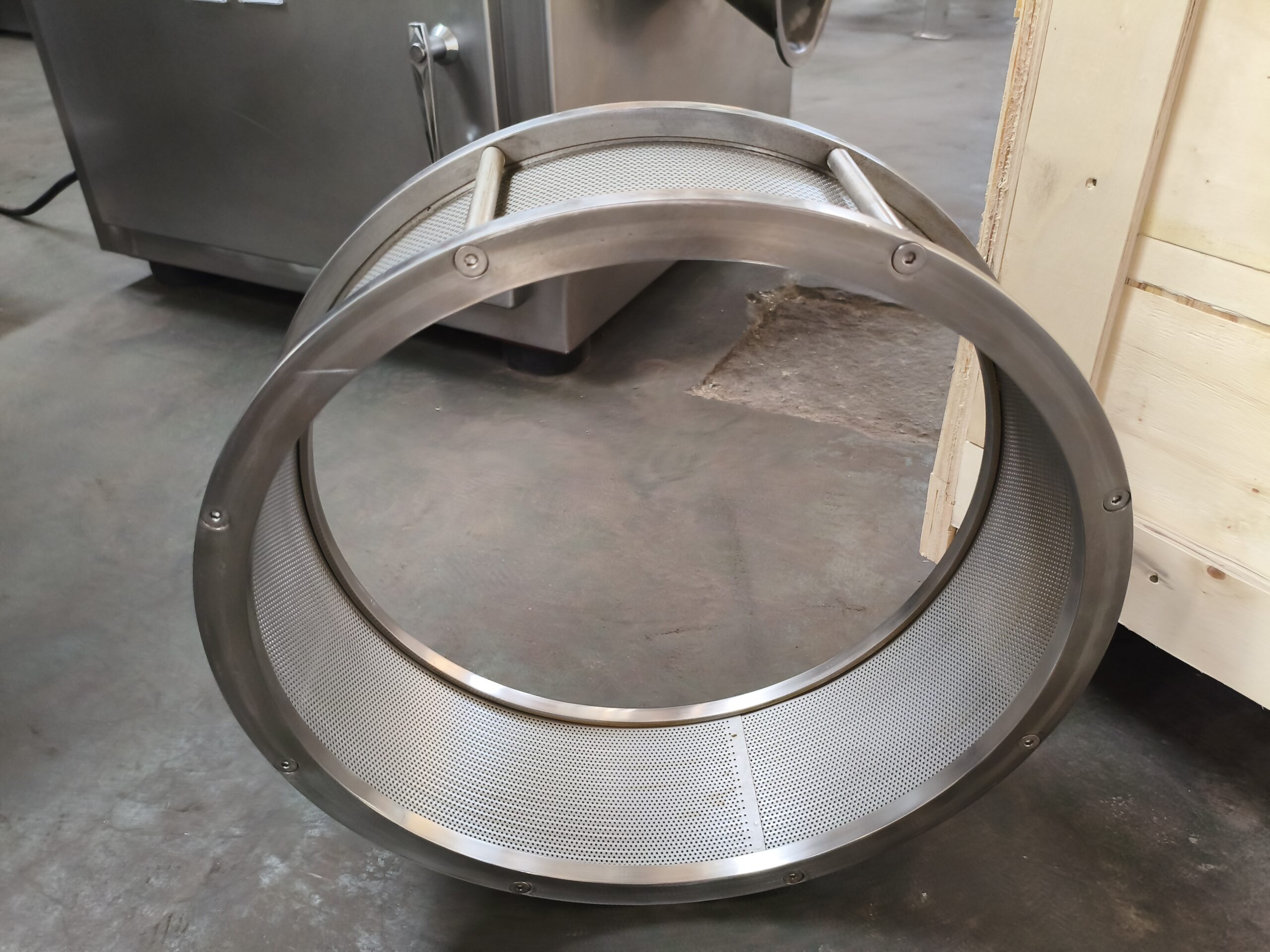
Interchangeable screens for fineness control
Particles smaller than the installed screen openings discharge from the chamber; oversized particles remain for further reduction. Changing the screen provides flexibility for different mesh targets without adding a separate classifier.
Continuous operation and straightforward control
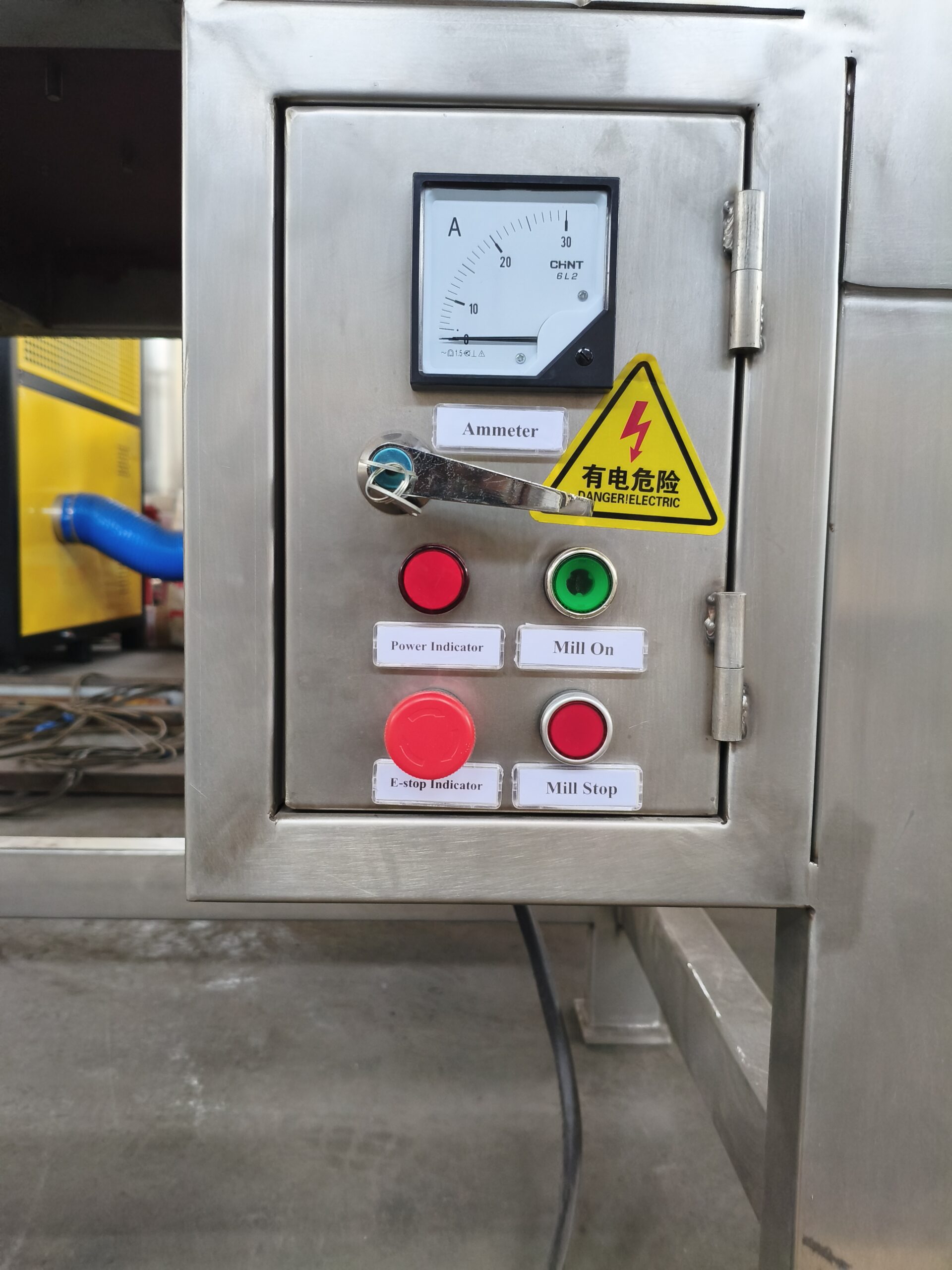
The pin-and-screen structure supports continuous industrial processing. Operators can monitor the mill through the control cabinet, while feeding rate, rotor speed and screen selection can be optimized during commissioning.
Stainless-steel, cleanable construction
Product-contact parts can be configured in SS304 for general food or cosmetic powder processing, or SS316L where stronger corrosion resistance or a specific internal standard is required. The exact scope鈥攊ncluding chamber, pins, screen, hopper and discharge鈥攕hould be defined in the quotation.
How the YDWS Pin Mill works
- Feeding: dried hulls enter manually or through an automatic feeder.
- Impact grinding: rotating pins repeatedly impact, collide with and shear the hulls.
- Screen classification: qualified particles pass the installed screen; larger particles remain for further reduction.
- Collection: powder discharges to a bin or downstream packing system, with optional dust capture for airborne fines.
The installed screen is the main fineness-control element. Rotor speed and feeding rate can also be adjusted to balance output, heat generation and particle-size distribution.
Configuration options
Standalone pin mill
Suitable for moderate production where hulls are clean and dry and the customer already has collection or packing equipment.
Pin mill with dust collection
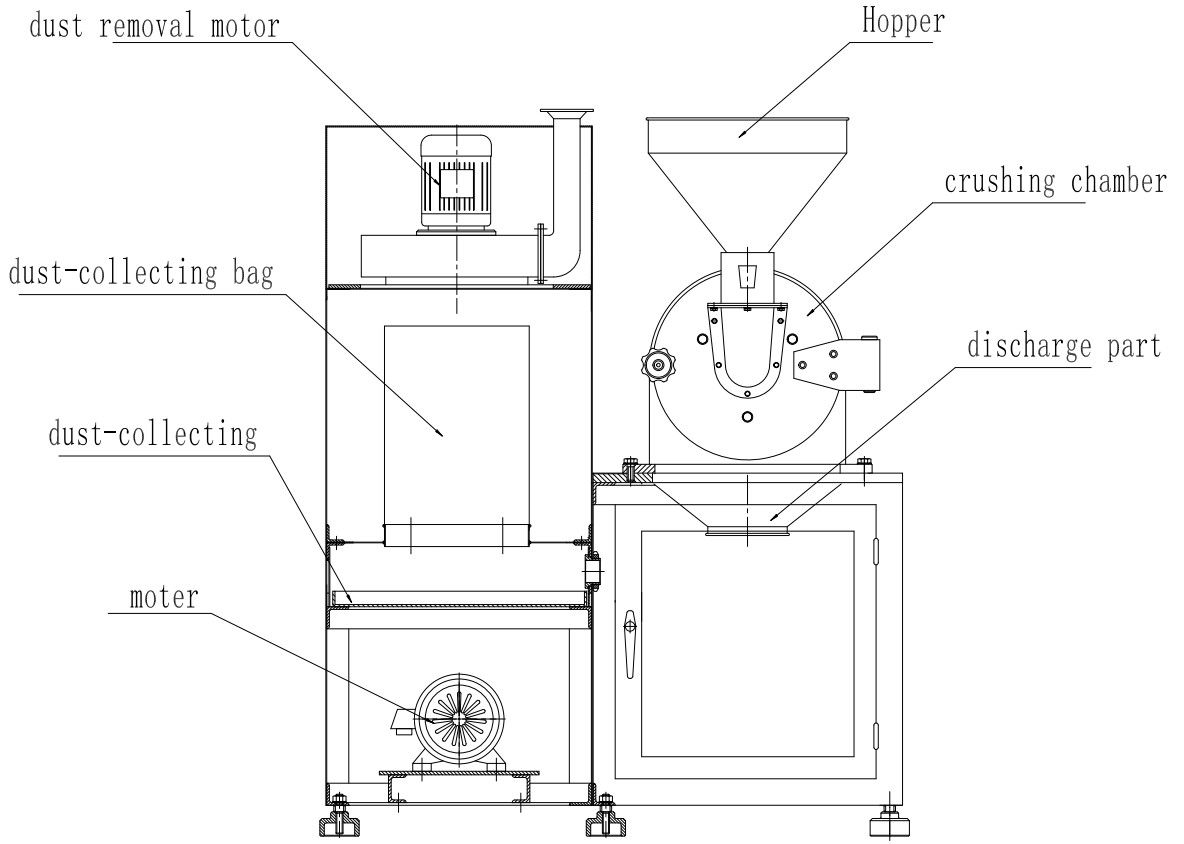
A dust collection box or pulse collector can improve powder recovery and workshop cleanliness for continuous or enclosed production.
Complete powder processing system
Feeding, conveying, dust collection, sifting and packing equipment can be combined around the mill according to capacity, plant layout and cleanliness requirements.

Equipment comparison
Pin mill vs. hammer mill
For lightweight, fibrous hulls, repeated pin impact and shear may provide a more consistent particle-size distribution than conventional hammer milling. Final selection still depends on feed condition, target fineness and required capacity.
Pin mill vs. air classifier mill
For a 40鈥?0 mesh target, a screened pin mill is generally the simpler and more economical configuration. An air classifier mill is more relevant when finer powder鈥攕uch as 100 mesh or above鈥攐r screenless classification is required.
Single-stage vs. two-stage grinding
Clean, dry and small buckwheat hulls can normally be processed in one stage. Add pre-cleaning or coarse crushing only when the feed is unusually large, contaminated or requires a wider size reduction ratio.
Information needed to select the right model
Raw material
- Raw, dried or pretreated?
- Moisture and bulk density?
- Foreign material, dust or broken grain?
- Oil or surface residue?
Feed and output
- Maximum feeding size?
- Manual or automatic feeding?
- 40 mesh, 60 mesh or another target?
- Narrow distribution or final sifting needed?
Capacity and operation
- Required kg/h?
- Feed rate or qualified-powder output?
- Continuous operating hours?
- Local voltage, frequency and phase?
Construction
- SS304 or SS316L contact parts?
- Food-grade material certificates?
- CE documentation?
- Dust-control or cooling requirement?
Capacity normally decreases as the required powder becomes finer. Model selection should therefore link throughput to the target mesh and qualified-powder yield.
Frequently asked questions
Is a coarse crusher required?
Usually not for clean, dried hulls that are already small and brittle. It becomes relevant when the incoming material is large or contaminated.
How is final fineness controlled?
The discharge screen provides primary size control. Screen opening, rotor speed, feeding rate and material characteristics all affect the final result.
What fineness can the mill produce?
The project target and primary source test result are approximately 40鈥?0 mesh. A separate statement in the source FAQ gives an approximate 40鈥?20 mesh reference range. Treat 40鈥?20 mesh as a source reference value鈥攏ot a guaranteed range鈥攁nd confirm any target outside 40鈥?0 mesh through a material test.
Will the powder clog the screen?
The source describes buckwheat hull powder as low-fat, non-sticky and generally free-flowing, which reduces blockage risk. Moisture, contamination and operating settings should still be checked.
Can YINDA provide a complete line?
Yes. The project can include feeding, grinding, screen classification, dust collection, conveying and packing according to the material, capacity and final specification.
Get a customized buckwheat hull grinding solution
Send your raw-material condition, target mesh, hourly capacity and construction requirements for material evaluation, process design, screen selection and equipment configuration.
Dennie Yuan | Powder Processing Solution Specialist
Email: dennie@yindamachinery.com
WhatsApp / WeChat: +86-13914192807
Website: https://yindapowdertec.com/
Final machine model, capacity, fineness and configuration are subject to project review and material testing.