
Walnut Shell Grinding Machine How to Grind Dehydrated Walnut Shell to 100–120 Mesh

YINDA Powder Processing Solution
Walnut Shell Grinding Machine How to Grind Dehydrated Walnut Shell to 100鈥?20 Mesh
If you need to grind dried or dehydrated walnut shells into 100鈥?20 mesh powder, Yinda Machinery recommends a combination of the YDCS Coarse Crusher and YDWF Series Air Classifier Mill (ACM mill).
Direct Answer
The YDCS Coarse Crusher is used for the initial size reduction of large walnut shell pieces, while the YDWF Air Classifier Mill performs fine grinding and dynamic air classification to produce the required fine walnut shell powder.
For typical walnut shell feedstock with a particle length of approximately 3鈥? cm and a moisture content of around 3鈥?%, this configuration provides an integrated solution for coarse crushing, fine grinding, classification, conveying and automatic collection.
Actual capacity and final particle-size distribution depend on the raw material properties, moisture content, feed size, hardness, required particle-size distribution and machine configuration. Yinda Machinery can recommend the appropriate configuration based on your actual material and production requirements.
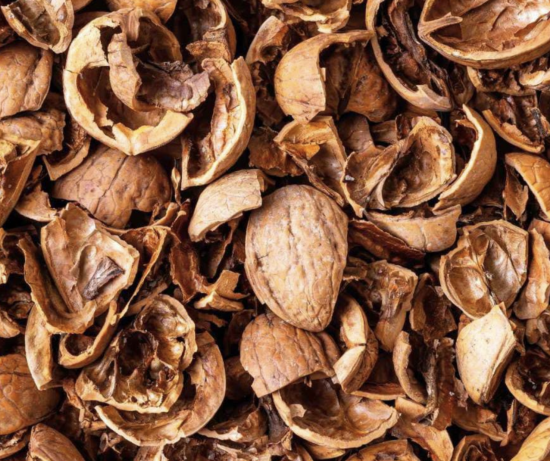
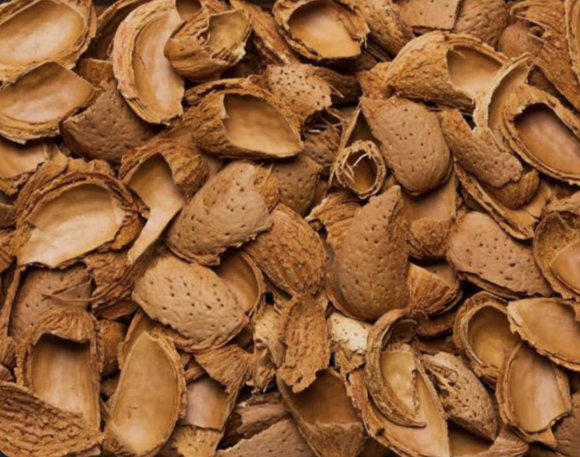
Applications of Dehydrated Walnut Shell
Walnut shell is a natural agricultural by-product. After cleaning, drying and size reduction, walnut shell can be processed into different particle sizes and used in a variety of industrial applications.
1.1 Oil & Gas and Drilling Fluids
Ground walnut shell is widely used as a natural granular material in oil and gas drilling-related applications.
Different particle sizes can be selected or blended according to drilling-fluid formulations and operating requirements. Depending on the application, customers may require coarse walnut shell particles, medium-sized particles or finer walnut shell powder such as 100鈥?20 mesh.
For companies manufacturing their own drilling additives, an efficient walnut shell grinding system can provide better control over particle size and product consistency.
1.2 Abrasive Blasting and Surface Treatment
Walnut shell is a relatively soft, naturally derived abrasive material. Properly processed walnut shell particles can be used in selected surface-cleaning and polishing applications.
Its natural origin and ability to be processed into different particle sizes make walnut shell a useful alternative material for certain industrial applications.
1.3 Polishing and Cleaning Materials
Fine walnut shell powder can be incorporated into certain industrial cleaning, polishing and abrasive formulations.
With an air classifier mill, manufacturers can adjust the classification conditions to obtain different particle-size ranges for different formulations.
1.4 Fillers and Composite Materials
Walnut shell powder can also be used as a natural filler or functional particulate material in selected industrial formulations and composite materials.
The specific application depends on the formulation, required particle size and performance requirements of the finished product.
1.5 Other Industrial Applications
Depending on the particle size and processing method, walnut shell can be used in:
閳?/span> Drilling-fluid additives
閳?/span> Industrial polishing materials
閳?/span> Cleaning materials
閳?/span> Composite materials
閳?/span> Fillers
閳?/span> Other specialty industrial formulations
For walnut shell processors, therefore, the ability to consistently produce the required particle size is an important part of the production process.
What Are the Grinding Characteristics of Dried Walnut Shell?
Dried walnut shell has a different structure from many conventional food or chemical powders. It contains a hard shell structure and fibrous plant material, so several factors should be considered when designing a walnut shell grinding process.
2.1 Large Feed Size Requires Pre-Crushing
Walnut shell feedstock can be approximately 3鈥? cm or even larger.
Feeding large shell pieces directly into a fine grinding machine can increase the load on the mill and reduce grinding efficiency.
For this reason, Yinda recommends using the YDCS Coarse Crusher for initial size reduction before fine grinding.
2.2 Moisture Content Affects Grinding Performance
Moisture content is an important factor in walnut shell grinding.
For fine grinding to 100鈥?20 mesh, appropriately dried material can generally provide better grinding and classification conditions.
If the moisture content is too high, problems such as material adhesion, blockage and reduced grinding efficiency may occur.
The optimum moisture level should therefore be determined according to the actual raw material and final product requirements.
2.3 Stable Particle Size Is Important
For drilling additives, industrial fillers and other fine powder applications, customers are usually concerned not only with whether the material can be ground, but also with particle-size consistency and product uniformity.
The YDWF Air Classifier Mill uses dynamic air classification to control the particle size during the grinding process.
Why Choose the Yinda YDWF Air Classifier Mill?
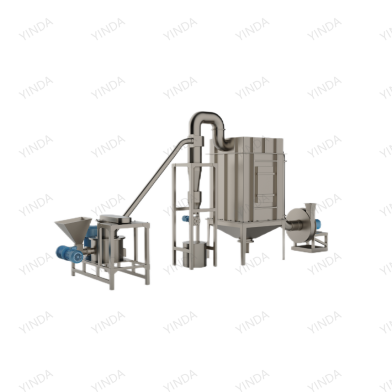
The Yinda YDWF Series Air Classifier Mill (ACM) integrates grinding, classification, conveying and collection into one powder-processing system.
It is designed for fine grinding and classification of a wide range of dry materials.
One of its key features is dynamic classification using airflow, rather than relying on a conventional screening mesh for final classification.
3.1 Screenless and Mesh-Free Dynamic Classification
Traditional screening equipment separates particles using a physical screen.
The YDWF Air Classifier Mill uses airflow, aerodynamic forces and centrifugal forces to dynamically classify particles after grinding.
This provides several advantages:
閳?/span> No conventional classification screen
閳?/span> No screen mesh replacement
閳?/span> Continuous grinding and classification
閳?/span> Adjustable particle size
閳?/span> Stable product classification
閳?/span> Suitable for continuous industrial production
3.2 Adjustable Fineness: Approximately 80鈥?20 Mesh
The YDWF Series Air Classifier Mill can achieve a product fineness range of approximately 80鈥?20 mesh, depending on the material and operating conditions.
For walnut shell processing, the target particle size can be adjusted according to the customer's requirements.
For the application discussed in this article, the target is approximately 100鈥?20 mesh walnut shell powder.
3.3 Easy Particle-Size Adjustment
The final particle size can be adjusted by changing the operating parameters of the classification system.
Yinda's YDWF Air Classifier Mill uses an adjustable classification system to control the relationship between the classification components and therefore influence the final particle-size range.
This allows operators to optimize the machine for different product specifications.
3.4 Automatic Product Collection
After grinding and classification, qualified powder is transported by negative-pressure airflow to the collection system.
A cyclone separator can automatically collect the product, reducing manual handling and improving production continuity.
3.5 Pulse Bag Dust Collection
The YDWF system can be equipped with a high-efficiency pulse bag filter.
Fine dust generated during grinding is carried by the airflow into the dust-collection system.
The automatic pulse-jet cleaning system periodically cleans the filter bags, allowing collected material to be recovered while reducing dust emissions in the production area.
This is particularly useful for factories requiring a cleaner production environment.
3.6 Easy Operation and Stable Running
The YDWF Air Classifier Mill uses an integrated system design and is engineered for stable operation, convenient cleaning and continuous production.
Watch the related YINDA equipment video
What Materials Can the YDWF Air Classifier Mill Grind?
The Yinda YDWF Series Air Classifier Mill is not limited to walnut shell.
It can be used for fine grinding and classification of a wide range of dry materials.
Food Industry
Typical examples include:
閳?/span> Chickpea flour
閳?/span> Sugar powder
閳?/span> Soybean powder
閳?/span> Rice flour
閳?/span> Dried food ingredients
閳?/span> Selected spices and plant-based materials
Chemical Industry
Applications may include:
閳?/span> Fine chemical powders
閳?/span> Dyes
閳?/span> Resins
閳?/span> Pigments
閳?/span> Selected plastic-related powders
Agricultural Chemicals
The mill can be used for selected dry pesticide raw materials and related powders, subject to material characteristics and safety requirements.
Minerals
Selected dry mineral materials and industrial mineral powders can also be processed depending on hardness, abrasiveness and the required fineness.
The typical fineness range of the YDWF system is approximately 80鈥?20 mesh, depending on the material and process conditions.
Watch the related YINDA equipment video
Yinda YDCS Coarse Crusher: Continuous Pre-Crushing for Difficult Materials
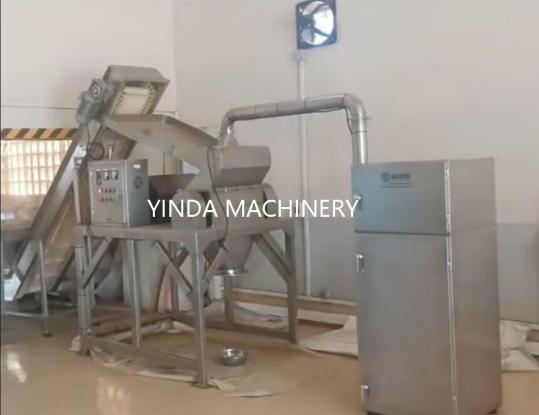
The Yinda YDCS Coarse Crusher is a continuous-working crushing machine designed for the pre-crushing and size reduction of large, hard-to-process materials.
It is widely used in the pharmaceutical, food, chemical, metallurgical and construction industries, and can be used for hard, difficult-to-crush materials as well as as a pre-processing machine before fine or ultrafine grinding.
For materials such as walnut shell, pecan shell, sawdust and other plant-based materials, the YDCS Coarse Crusher can reduce the initial feed size before the material enters the fine grinding system, helping reduce the load on the downstream mill.
4.1 Continuous Operation for Efficient Production
The YDCS Coarse Crusher operates with continuous feeding, continuous crushing and continuous discharge.
Its continuous-working design makes it suitable for industrial production and allows it to be integrated with screw conveyors, vacuum conveyors, air classifier mills, cyclone separators, dust collectors and packaging systems.
For a walnut shell grinding project targeting 100鈥?20 mesh, the process can be configured as:
Large Walnut Shell 鈫?YDCS Coarse Crusher 鈫?YDWF Air Classifier Mill 鈫?Cyclone Separator 鈫?Pulse Bag Filter 鈫?Finished Walnut Shell Powder
This configuration allows the coarse crushing stage and fine grinding/classification stage to operate as an integrated continuous process.
4.2 Suitable for Large and Difficult-to-Crush Materials
The YDCS Coarse Crusher is particularly suitable for the pre-processing of hard and difficult-to-crush materials and can also serve as the first-stage machine before fine grinding.
When the feed material is approximately 5鈥?0 cm in size, a coarse crusher can be considered according to the material characteristics.
If the feed size is larger than 10 cm, Yinda generally recommends using a coarse crusher first to reduce the material to a suitable size for subsequent processing.
For applications where the material will subsequently enter the YDWF Air Classifier Mill for fine grinding, we generally recommend controlling the actual feed size to approximately 0.5鈥? cm, depending on the material and machine configuration.
The optimum feed size should ultimately be confirmed according to the material type, hardness, shape, moisture content and required production capacity.
4.3 Strong Adaptability to Different Materials
The YDCS Coarse Crusher has strong adaptability to different raw materials and is not limited by a single material characteristic such as viscosity, hardness, softness or fiber content.
By selecting appropriate cutting components, screen specifications and operating parameters, the machine can achieve effective size reduction for a wide range of materials.
Typical applications include:
閳?/span> Walnut shell
閳?/span> Pecan shell
閳?/span> Sawdust
閳?/span> Dried plant materials
閳?/span> Food ingredients
閳?/span> Chemical raw materials
閳?/span> Hard lump materials
閳?/span> Other materials requiring pre-crushing
This flexibility makes the YDCS suitable not only for walnut shell processing, but also for many other industrial pre-crushing applications.
4.4 Simple Structure and Easy Cleaning
The YDCS Coarse Crusher is designed according to GMP-related design requirements and can be manufactured entirely from stainless steel.
Its simple internal structure makes inspection, cleaning and maintenance convenient.
For food, pharmaceutical and other applications with high hygiene requirements, the stainless-steel construction and easy-cleaning design can help reduce cleaning and maintenance work.
Depending on the application, the machine can be manufactured using:
SS304 stainless steel
SS316L stainless steel
Carbon steel configurations can also be provided for suitable industrial applications.
4.5 Low Noise and Stable Continuous Operation
The YDCS Coarse Crusher features a compact structure and stable operation, with relatively low operating noise.
It can be integrated with feeding, conveying, dust collection and downstream grinding equipment to create a continuous processing line from raw material feeding to finished-product collection.
4.6 The Role of the YDCS Coarse Crusher in Walnut Shell Grinding
For dried walnut shell grinding applications, the YDCS Coarse Crusher can be used as a pre-processing machine when the feedstock is relatively large.
For example, if the walnut shell is approximately 3鈥? cm, the YDCS can be selected according to the actual material characteristics and downstream grinding requirements.
Its main purpose is not to directly produce the final 100鈥?20 mesh powder, but to:
1. Reduce Feed Size
Large walnut shell pieces are pre-crushed into smaller particles.
2. Stabilize Downstream Feeding
The pre-crushed material provides a more suitable and consistent feed size for the YDWF Air Classifier Mill.
3. Reduce the Load on the Fine Grinding Mill
Pre-crushing reduces the particle size before fine grinding, helping the downstream mill operate more efficiently.
4. Improve Overall Process Continuity
When integrated with conveying equipment and the YDWF Air Classifier Mill, the YDCS can form a continuous process consisting of coarse crushing, fine grinding, classification and collection.
Therefore, for customers who need to process relatively large walnut shell pieces into 100鈥?20 mesh walnut shell powder, the YDCS Coarse Crusher can serve as an important first-stage processing machine.
Watch the related YINDA equipment video
Watch the related YINDA equipment video
How Does the YDCS Coarse Crusher Work?
For walnut shell pieces approximately 3鈥? cm in size, pre-crushing is generally recommended.
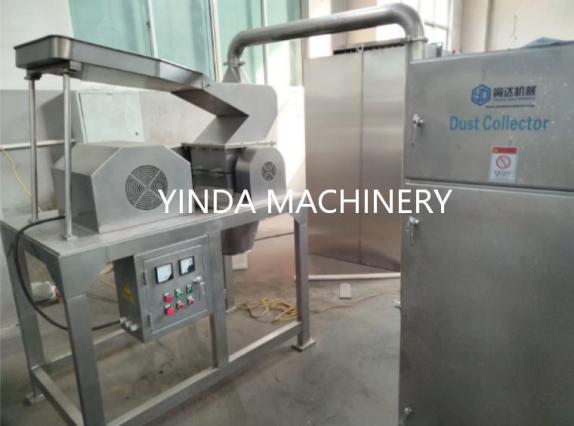
The YDCS Coarse Crusher mainly consists of:
閳?/span> Feed inlet
閳?/span> Crushing chamber
閳?/span> Discharge outlet
閳?/span> Electrical control box
A dust-collection system can also be supplied as an optional configuration.
Working Principle
Dried walnut shell enters the crushing chamber through the feed hopper.
Inside the crushing chamber, the material is subjected to impact and shearing forces between rotating knives and fixed knives.
The walnut shell is therefore reduced to smaller particles.
Under the action of centrifugal force generated by the rotating components, processed material moves toward the discharge outlet.
If a dust-collection system is installed, dust generated during crushing is transported by airflow into the dust collector.
The output size from the YDCS Coarse Crusher can be controlled using a screen, making it suitable for preparing the feed material for the subsequent YDWF Air Classifier Mill.
In a walnut shell processing line, the two machines therefore perform different functions:
YDCS = Pre-crushing
YDWF = Fine grinding + Dynamic classification
Source reference specifications; final model and performance should be confirmed for the actual material.
| Model | YDCS-100 | YDCS-200 | YDCS-300 | YDCS-400 |
|---|---|---|---|---|
| Production Capacity(kg/hr) | 80-100 | 100-200 | 200-300 | 300-500 |
| Feeding size(mm) | <80 | <100 | <100 | <100 |
| Discharge size(mm) | 0.5-20 | 0.5-20 | 0.5-20 | 0.5-20 |
| Motor(kw) | 3 | 4 | 5.5 | 11 |
| Speed of principal axis(r/min) | 960 | 960 | 960 | 960 |
| Dimension(mm) | 650*500*1100 | 800*650*1250 | 900*700*1400 | 900*800*1440 |
| Weight(kg) | 280 | 350 | 450 | 550 |
How Does the YDWF Air Classifier Mill Work?
The YDWF Air Classifier Mill is an integrated system combining grinding, classification, conveying and collection.
A typical system consists of:
閳?/span> Grinding chamber
閳?/span> Cyclone separator
閳?/span> Rotary airlock
閳?/span> Pulse bag filter
閳?/span> Centrifugal induced-draft fan
閳?/span> Electrical control cabinet
Step 1: Continuous Feeding
The raw material enters the feed hopper and is continuously delivered into the grinding chamber
Step 2: High-Speed Grinding
Inside the grinding chamber, the material is subjected to high-speed rotating grinding components.
The material is repeatedly exposed to impact and shearing forces until the particle size is sufficiently reduced.
Step 3: Entering the Classification Zone
The ground powder moves with the airflow through the guide ring and enters the classification chamber.
The high-speed rotating classifier wheel then separates particles according to their aerodynamic behavior.
Step 4: Dynamic Classification
Particles entering the classifier wheel are simultaneously affected by aerodynamic forces and centrifugal forces.
Particles larger than the critical classification diameter are relatively heavy and cannot pass through the classification zone. They are returned to the grinding chamber for further grinding.
Particles smaller than the critical classification diameter can pass through the classifier and are carried by the negative-pressure airflow toward the collection system.
This creates a continuous grinding鈥揷lassification cycle.
Step 5: Cyclone Separation and Dust Collection
Qualified powder is transported through the outlet pipe to the cyclone separator.
The cyclone separates and collects the product.
Very fine dust is then carried to the pulse bag filter for further collection.
Optional Equipment and Configurations from Yinda Machinery
Yinda Machinery can configure the walnut shell grinding system according to the customer's raw material, production capacity, final particle size and automation requirements.
5.1 Equipment Materials
The equipment can be manufactured using different materials according to the application:
閳?/span> Carbon steel
閳?/span> SS304 stainless steel
閳?/span> SS316L stainless steel
The appropriate material can be selected according to corrosion resistance, hygiene requirements, product characteristics and customer specifications.
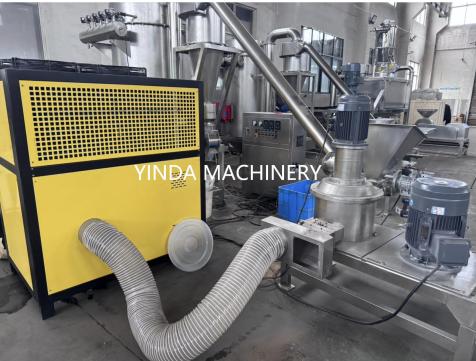
5.2 Air Cooling Chiller
For materials that generate heat during grinding or applications requiring temperature control, an air cooling chiller system can be added.
The air cooling chiller can help control temperature rise during continuous grinding.
5.3 Conveying Equipment
Yinda can provide screw conveyors, vacuum conveying systems and other material-transfer equipment.
This allows continuous conveying from feeding to grinding and collection, reducing manual material handling.
5.4 Packaging Machine
After grinding and collection, the finished walnut shell powder can be transferred to an automatic or semi-automatic packaging machine for quantitative packaging.
5.5 Mixing Machine
If walnut shell powder needs to be blended with other raw materials according to a specific formulation, a powder mixing machine can be integrated into the production line.
Therefore, Yinda Machinery can supply not only an individual grinding machine, but also a more complete processing solution:
Feeding 鈫?Coarse Crushing 鈫?Fine Grinding 鈫?Classification 鈫?Collection 鈫?Packaging
Customer Case: Walnut Shell Grinding Project in Pakistan
Yinda Machinery received an inquiry from a customer in Pakistan operating in the Oil & Gas sector.
The customer supplies locally manufactured drilling chemicals and was looking for a suitable grinding system to process natural raw materials for drilling-fluid applications.
The main technical requirements for the walnut shell application were:
Raw Material: Walnut shell
Feed size: approximately 3鈥? cm in length
Moisture content: approximately 3鈥?% by weight
Target Particle Size: Approximately 100鈥?20 mesh
The customer wanted to know whether Yinda Machinery could provide a suitable grinding mill or complete processing system capable of producing the required particle size.
For this application, Yinda Machinery recommended a combination of:
YDCS Coarse Crusher + YDWF Air Classifier Mill
The YDCS Coarse Crusher is used to reduce the initial 3鈥? cm walnut shell pieces to a suitable feed size.
The YDWF Air Classifier Mill then performs fine grinding and dynamic classification to produce the target 100鈥?20 mesh walnut shell powder.
This configuration is particularly suitable for applications requiring:
閳?/span> Continuous production
閳?/span> Adjustable particle size
閳?/span> Fine grinding
閳?/span> Dynamic classification
閳?/span> Automatic conveying
閳?/span> Automatic product collection
閳?/span> Centralized dust collection
For an actual commercial project, the final machine model, motor power, fan specifications, capacity and classification parameters should be confirmed according to the customer's actual raw material and grinding test results.
Source reference specifications; final model and performance should be confirmed for the actual material.
| Model | YDWF-15 | YDWF-20 | YDWF-30 | YDWF-40 | YDWF-60 |
|---|---|---|---|---|---|
| Capacity(kg/h) | 30-100 | 40-200 | 60-300 | 80-500 | 100-600 |
| Speed of principal axis(r/min) | 5800 | 3600 | 3600 | 2900 | 2300 |
| Feeding size(mm) | 鈮?5 | 鈮?5 | 鈮?5 | 鈮?5 | 鈮?5 |
| Crushing size(mesh) | 80-320 | 80-320 | 80-320 | 80-400 | 80-400 |
| Total motor(kw) | 20 | 35 | 55 | 75 | 95 |
| Dimension(mm) | 4500*1600*2600 | 6200*1900*3300 | 6500*2200*3600 | 7500*2300*3900 | 8000*2600*4300 |
Frequently Asked Questions About Walnut Shell Grinding
Q1: Can the YDCS + YDWF system grind walnut shell to 100鈥?20 mesh?
Yes.
For suitable dried walnut shell, Yinda Machinery recommends using the YDCS Coarse Crusher for pre-crushing followed by the YDWF Air Classifier Mill for fine grinding and dynamic classification.
A target of approximately 100鈥?20 mesh can be achieved depending on the raw material and process conditions.
The actual particle-size distribution and production capacity should be confirmed through material testing and equipment configuration.
Q2: Why is pre-crushing necessary for walnut shell?
If the walnut shell is approximately 3鈥? cm or larger, feeding it directly into a fine grinding mill can increase the machine load.
Pre-crushing with the YDCS reduces the feed size and helps the YDWF Air Classifier Mill operate more efficiently.
Q3: What moisture content is suitable for walnut shell grinding?
The walnut shell in the Pakistan project had a moisture content of approximately 3鈥?% by weight.
The optimum moisture content depends on the raw material, target fineness and process conditions.
Excessive moisture may increase material adhesion, blockage and reduced grinding efficiency.
Q4: Does the YDWF Air Classifier Mill use a screen?
The YDWF Air Classifier Mill uses dynamic air classification rather than a conventional screening mesh for final particle classification.
The particles are separated according to aerodynamic and centrifugal forces.
Q5: Can I adjust the final product between 100 mesh and 120 mesh?
Yes.
The classification system can be adjusted to influence the final particle-size range.
The actual particle-size distribution should be determined according to the raw material characteristics and operating conditions.
Q6: Can walnut shell powder be collected automatically?
Yes.
The system can be equipped with a cyclone separator, rotary airlock and pulse bag filter to provide automatic product collection and reduce manual handling.
Q7: Will the grinding process generate a lot of dust?
The YDWF system can be equipped with a high-efficiency pulse bag filter.
Dust generated during grinding is transported into the dust collector and captured by the filter bags. Automatic pulse-jet cleaning helps maintain the filtration performance and allows collected powder to be recovered.
Q8: Can the equipment be made from stainless steel?
Yes.
Yinda Machinery can provide equipment in:
閳?/span> Carbon steel
閳?/span> SS304
閳?/span> SS316L
The material selection depends on the customer's application and hygiene/corrosion-resistance requirements.
Q9: Is the YDWF Air Classifier Mill only used for walnut shell?
No.
The YDWF Air Classifier Mill can process many types of dry food ingredients, chemical powders, agricultural chemical materials, pigments, resins and selected minerals.
Why Choose Yinda Machinery for Walnut Shell Grinding?
Grinding walnut shell, pecan shell, sawdust and other plant-based materials requires more than simply selecting a grinding machine.
A complete process needs to consider:
Raw Material Size 鈫?Moisture Content 鈫?Coarse Crushing 鈫?Fine Grinding 鈫?Dynamic Classification 鈫?Dust Collection 鈫?Automatic Collection 鈫?Packaging
Yinda Machinery can provide equipment and complete powder-processing solutions based on the customer's actual application.
The YDCS Coarse Crusher handles the initial size reduction of large walnut shell pieces, while the YDWF Air Classifier Mill performs fine grinding and dynamic classification.
This combination provides a practical solution for customers looking to produce consistent walnut shell powder at a controlled particle size.
Conclusion: 100鈥?20 Mesh Walnut Shell Grinding Solution
For customers looking to grind dried or dehydrated walnut shell to 100鈥?20 mesh, Yinda Machinery recommends the following process configuration:
YDCS Coarse Crusher 鈫?YDWF Air Classifier Mil
The system can provide:
閳?/span> Pre-crushing of large walnut shell pieces
閳?/span> Fine grinding
閳?/span> Dynamic air classification
閳?/span> Adjustable target particle size
閳?/span> Continuous production
閳?/span> Automatic product collection
閳?/span> Centralized dust collection
閳?/span> Reduced manual handling
For a walnut shell application with approximately 3鈥? cm feed size, 3鈥?% moisture content, 400鈥?00 kg/h target capacity and 100鈥?20 mesh target fineness, the YDCS + YDWF configuration is a practical solution to consider.
If you are looking for a walnut shell grinding machine, walnut shell grinder, walnut shell powder production line, or a 100鈥?20 mesh walnut shell grinding solution, contact Yinda Machinery.
We can evaluate your raw material size, moisture content, target fineness, required capacity and final application and recommend a suitable grinding and classification system.
Material testing can also be arranged when required to help confirm the appropriate machine configuration and process parameters.
Yinda Machinery 鈥?Professional Crushing, Grinding, Classification and Powder Processing Equipment Manufacturer.
Request a customized powder processing solution
Send the raw material condition, target particle size, hourly capacity, local electrical supply and construction requirements for project evaluation and material testing.
Dennie Yuan | Powder Processing Solution Specialist
Email: dennie@yindamachinery.com
WhatsApp / WeChat: +86-13914192807
Website: https://yindapowdertec.com/
Final machine model, capacity, fineness, temperature-control and safety configuration are subject to project review and material testing.